
Into The Archive
Magazine and book scans from an archive spanning over 20 years. Unpacked with annotations that help you to delve deeper into fashion’s past.
issue 02- Part Two
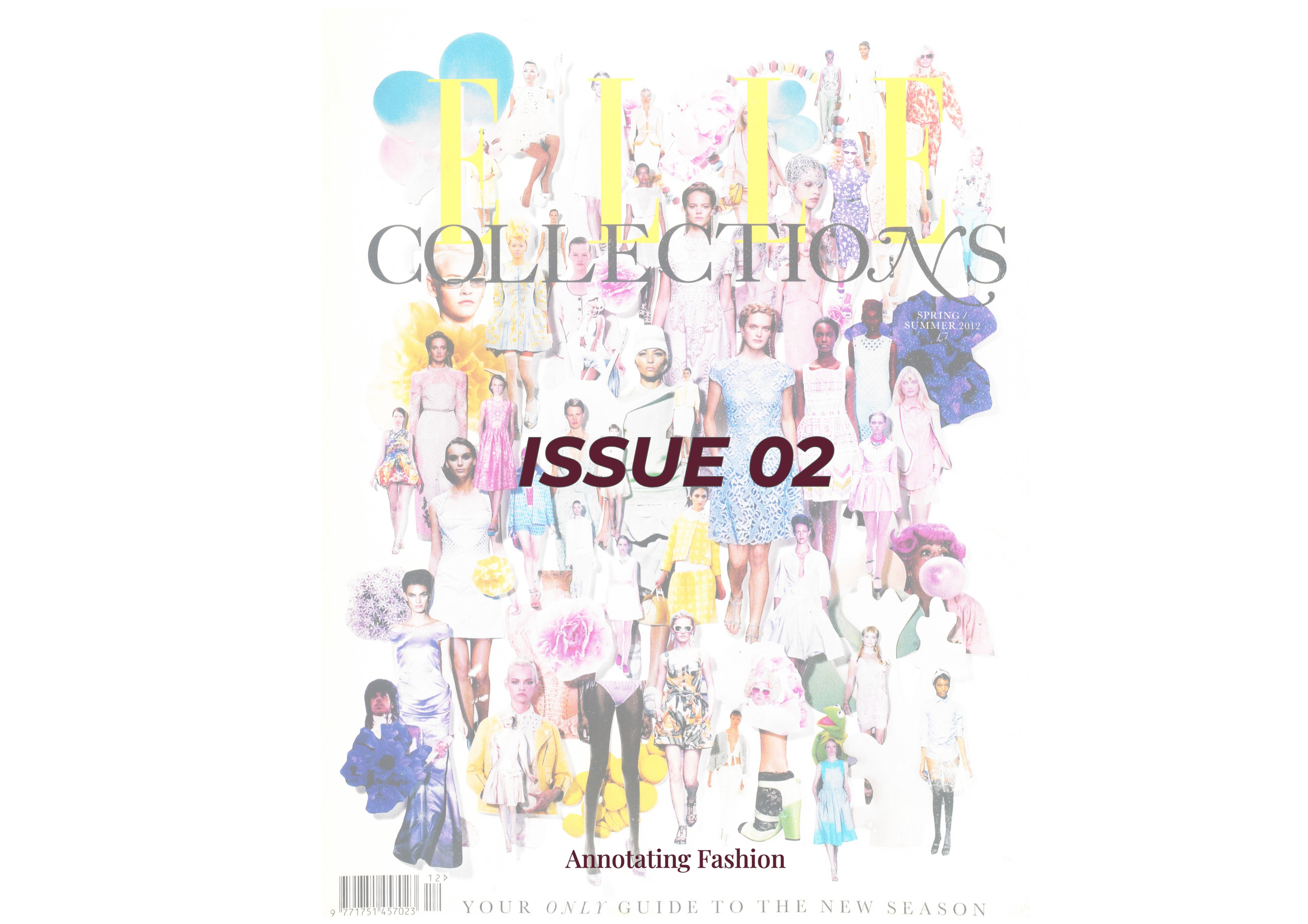
Into the Archive unpacks a magazine or publication from the archive — annotating the fashion, the culture, and the world it came from. Issue 02 unpacks the SS ‘12 issue of ELLE Collections.
issue 02- Part One
Into the Archive unpacks a magazine or publication from the archive — annotating the fashion, the culture, and the world it came from. Issue 02 unpacks the SS ‘12 issue of ELLE Collections.
Issue 01
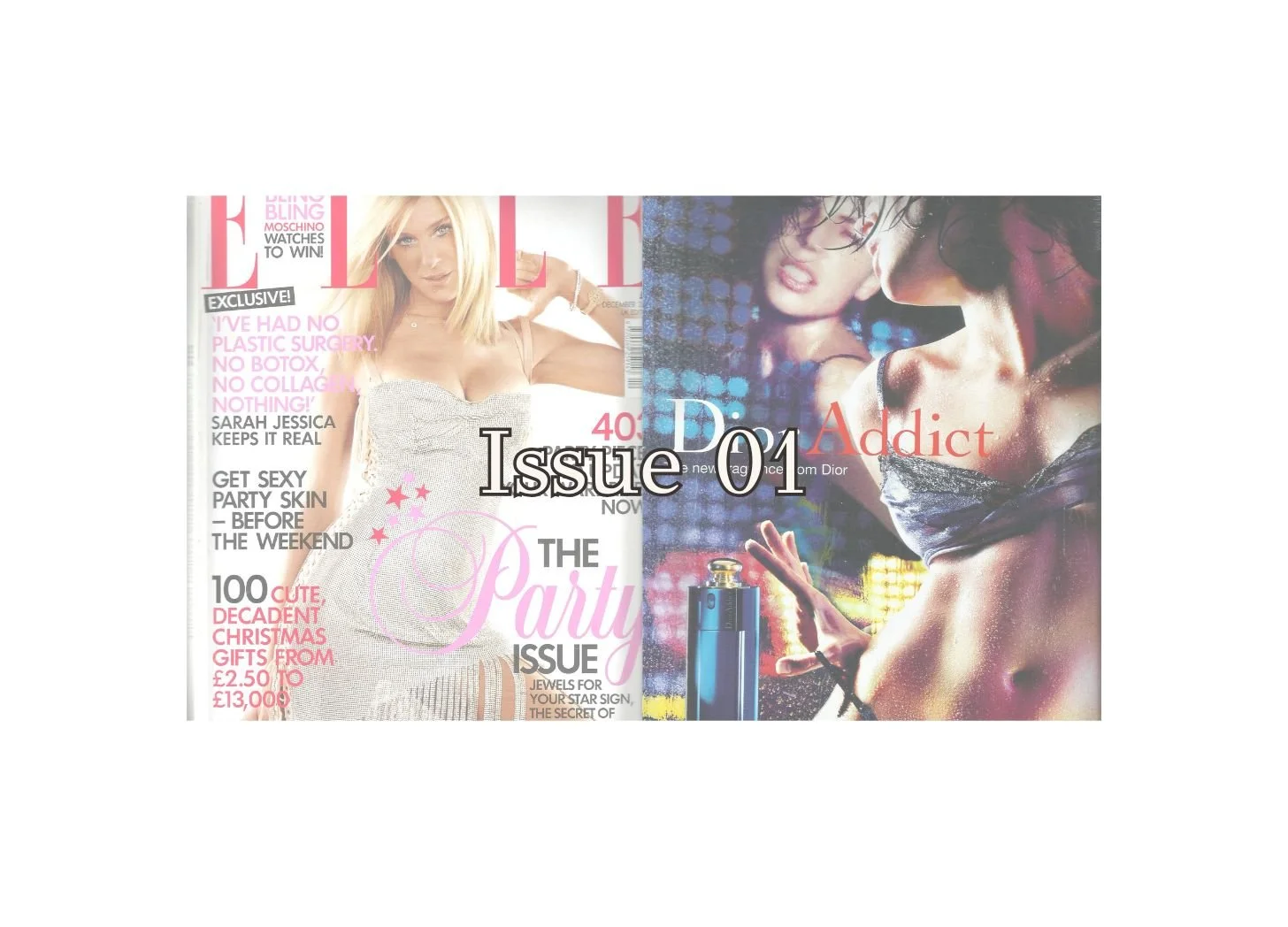
Into the Archive unpacks a magazine or publication from the archive — annotating the fashion, the culture, and the world it came from. Issue 01 unpacks the December 2003 issue of ELLE UK.
ELLE UK — December 2003£3.00
Editor-in-Chief: Sarah Bailey Cover Star: Sarah Jessica Parker Cover Photographer: Michael Thompson Photography Director: Duane Rocco Ashurst Styling: Joe Zee Hair: Serge Normant Makeup: Laura Mercier Cover Look: Dolce & Gabbana
The Context
December 2003.
The final season of Sex and the City was gearing up for its finale. Fatman Scoop, Kylie Minogue, Busted and Westlife topped the charts. Love Actually was in cinemas. The average UK house price had just crossed £150,000 for the first time.
And for £3, you could buy this issue of ELLE UK — 300 pages of fashion, beauty, and lifestyle.
Flicking through it now feels like stepping into a time machine.
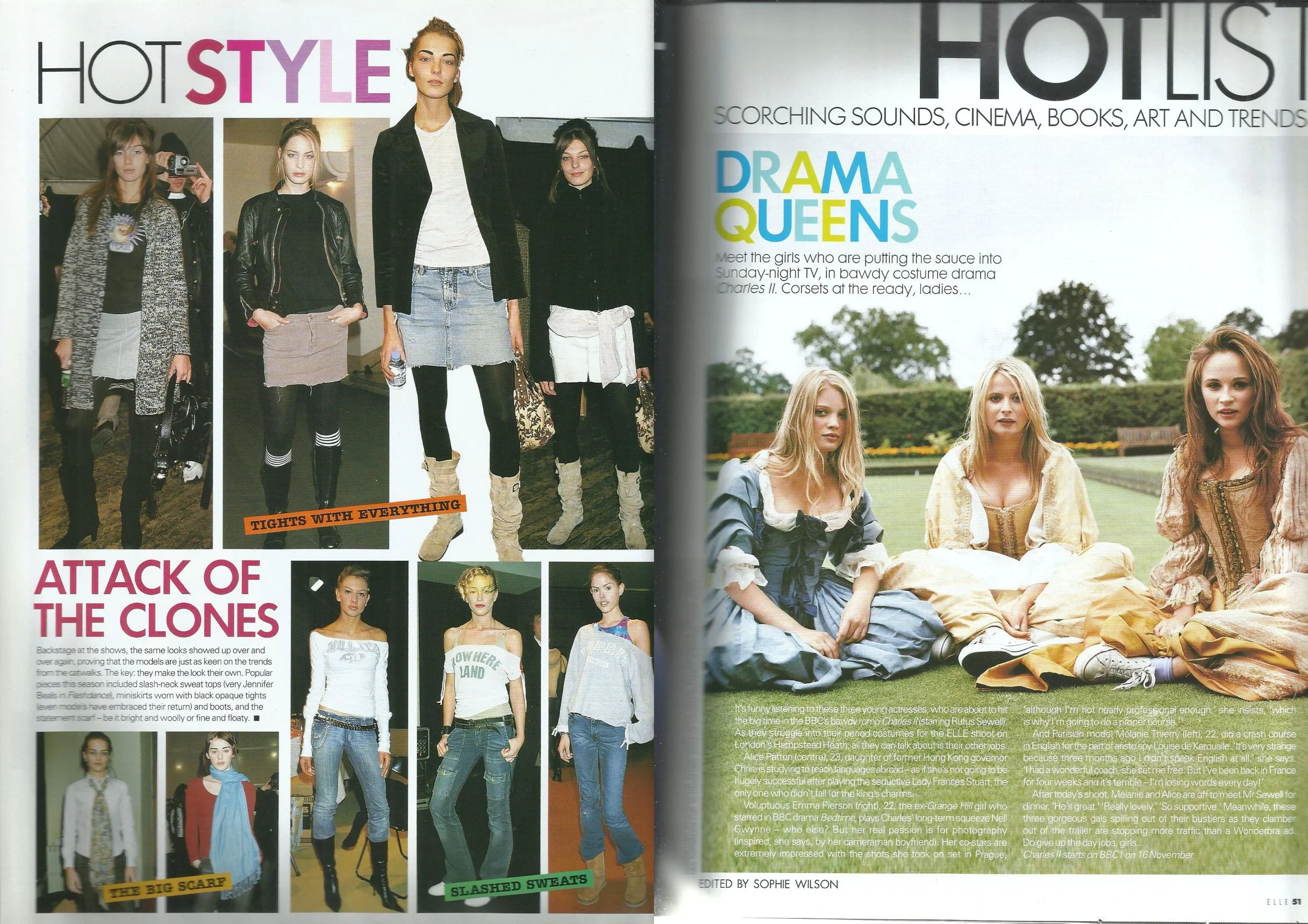
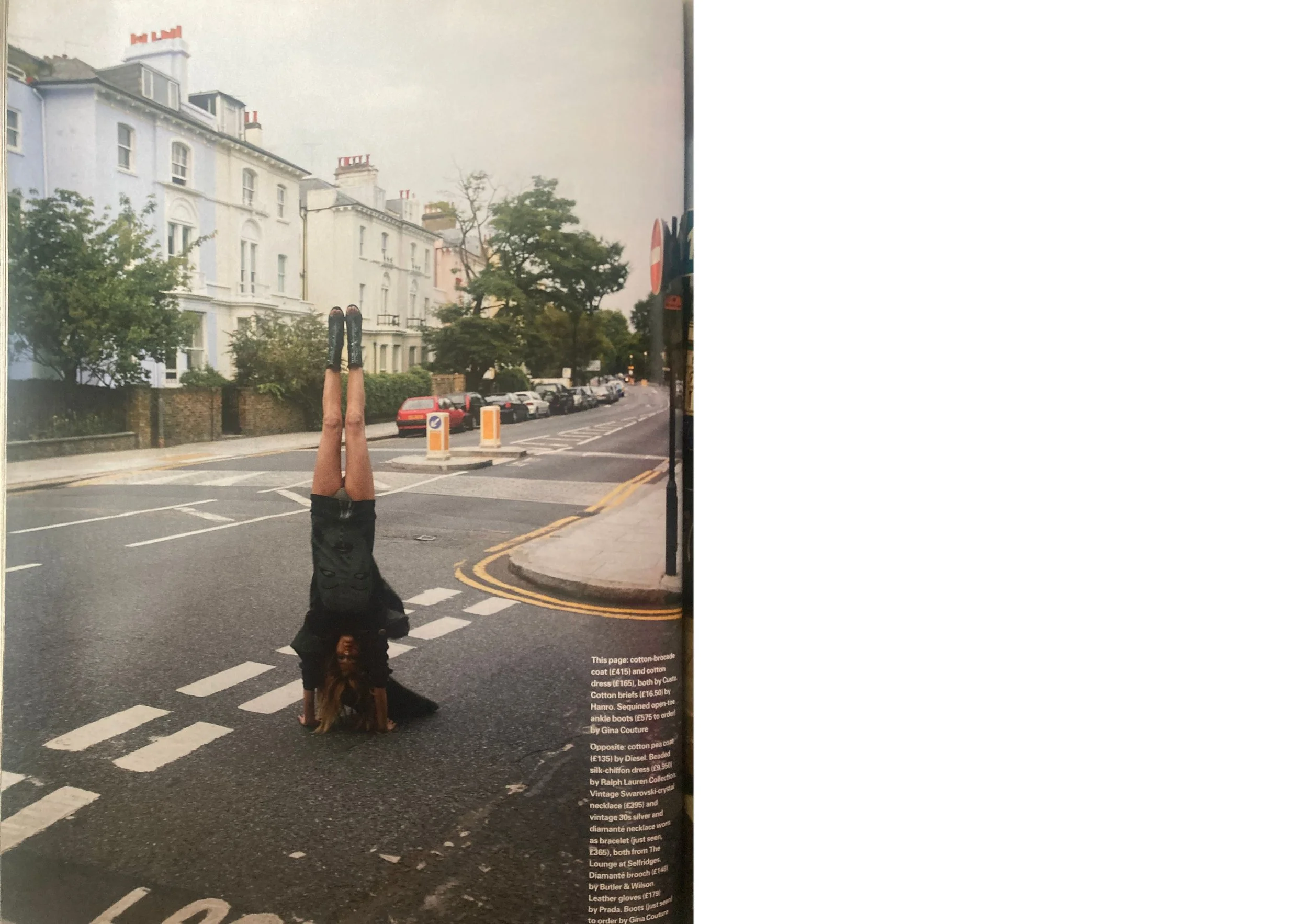
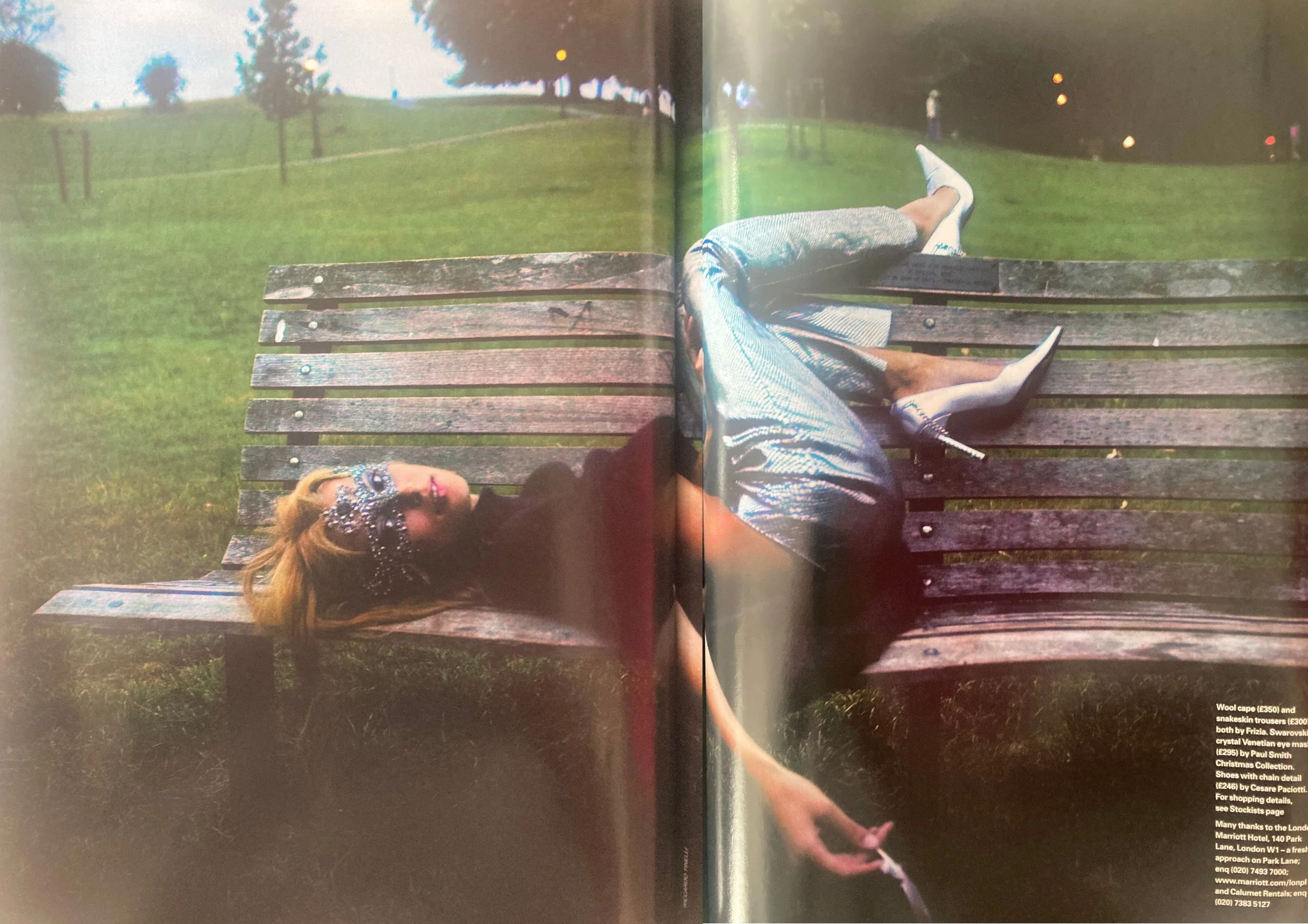
The typography is bold and colourful in a way that contemporary magazine design has almost entirely abandoned in favour of minimalism. The editorials have a particular kind of joy to them — saturated, exuberant, unapologetically of their moment. There are puzzles and games, which I had completely forgotten about, and star signs too.
There is a warmth and a playfulness to the design that the sleek and almost sombre aesthetic of today's fashion media rarely allows itself.
It feels more lifestyle than high fashion.
The Cover
Sarah Jessica Parker — at the absolute peak of her cultural moment as Carrie Bradshaw — wearing Dolce & Gabbana, shot by Michael Thompson. Styling by Joe Zee, hair by Serge Normant, makeup by Laura Mercier.
What's worth noting is how the celebrity cover had become, by 2003, the dominant logic of mainstream fashion magazines. The model cover was giving way to the actress, the pop star, the cultural icon.
In the early 2000s, editors and advertisers alike found that popular actresses and musicians sold more magazines than models — particularly as the supermodel era of the 1990s had come to an end.
Sarah Jessica Parker's cover was, in that sense, entirely of its moment.
The Annotations
On technology
The gift guide recommends cutting-edge technology for Christmas 2003. DVD players. Digital cameras — no night out was complete without one. And, notably, mobile phones that can take colour photographs.
It's a stark reminder that the devices which now mediate almost every aspect of how we consume and produce fashion content simply did not exist 23 years ago. The influencers and their brand deals, the Instagram aesthetic, the TikTok microtrend — none of it was possible yet. Fashion media was still a one-way conversation, from page to reader.
On aspiration
Flicking through the fashion pages feels like stepping into a cultural memory. The silhouettes, the colour palettes, the styling references — all of it points toward a very specific early 2000s ideal being transmitted from these pages into high streets across the country. A whole generation of young women trying to translate the ELLE woman into their Saturday morning shopping trips to Miss Selfridge, Topshop, New Look, H&M, Jane Norman, and River Island.
Bourdieu would have something to say about that.
On bodies
The most eyerolling annotation in this issue is a beauty feature titled "How to Survive Canapés Hell." The piece offers advice on navigating the Christmas party season without — and the language here is telling — "over-indulging." The recommended strategy: drink water, eat Ryvita and cottage cheese beforehand so you arrive full enough to resist the canapés.
In the early 2000s, this type of content would have been considered entirely normal — diet culture dressed as lifestyle advice. Cleverly presented not as restriction but as preparation; a form of self-management so naturalised that it required no interrogation at the time.
Reading it now, however, makes you pause. Women were being sold a very particular relationship with their bodies alongside their fashion and their beauty — one built on vigilance, restraint, and the management of appetite in every sense.
It is not surprising that so many millennials have, at some point, felt a complicated relationship with their bodies and their sense of self.
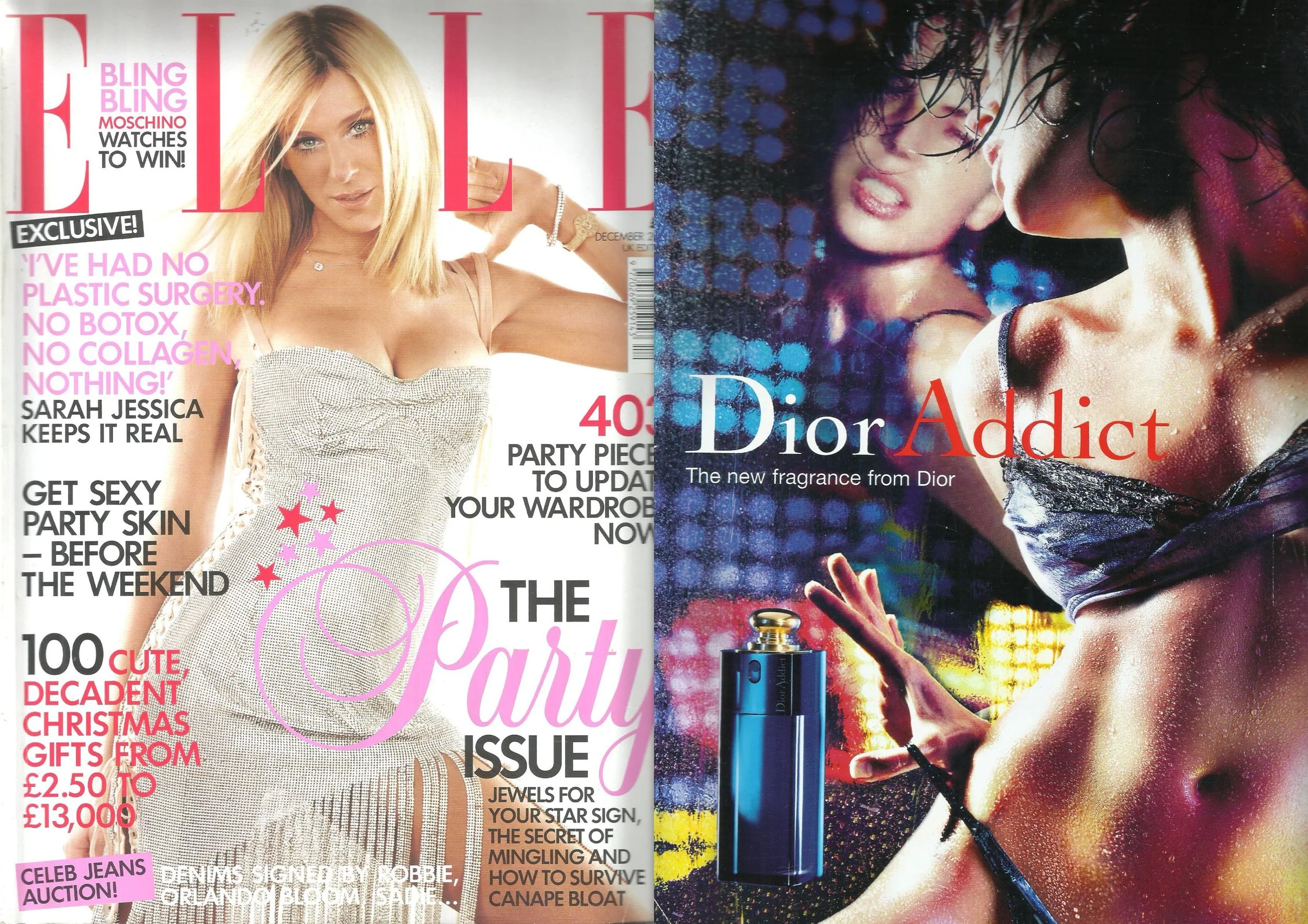
By the early 00s celebrities were starting to take over the front cover of fashion magazines, a spot once reserved for models.
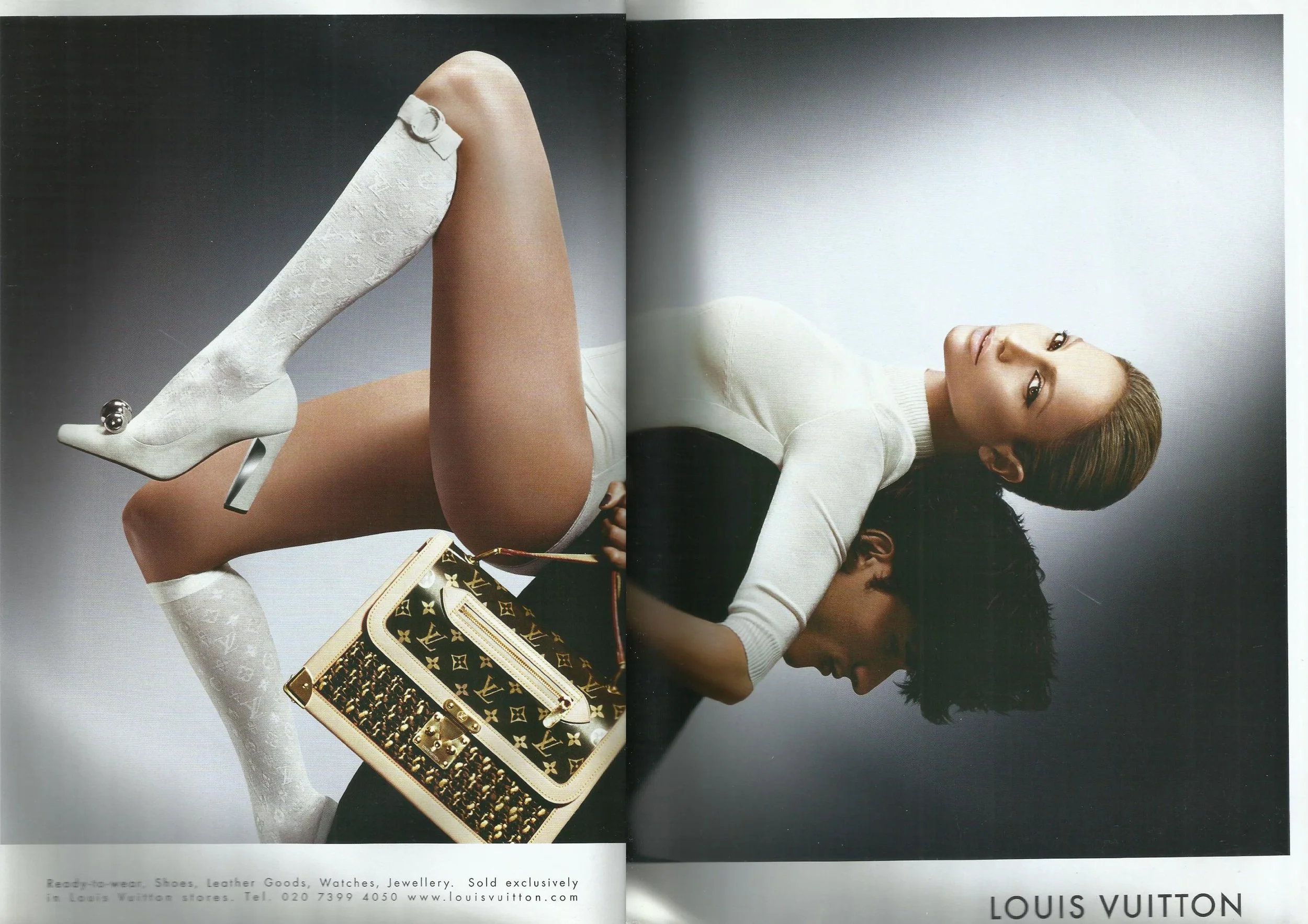
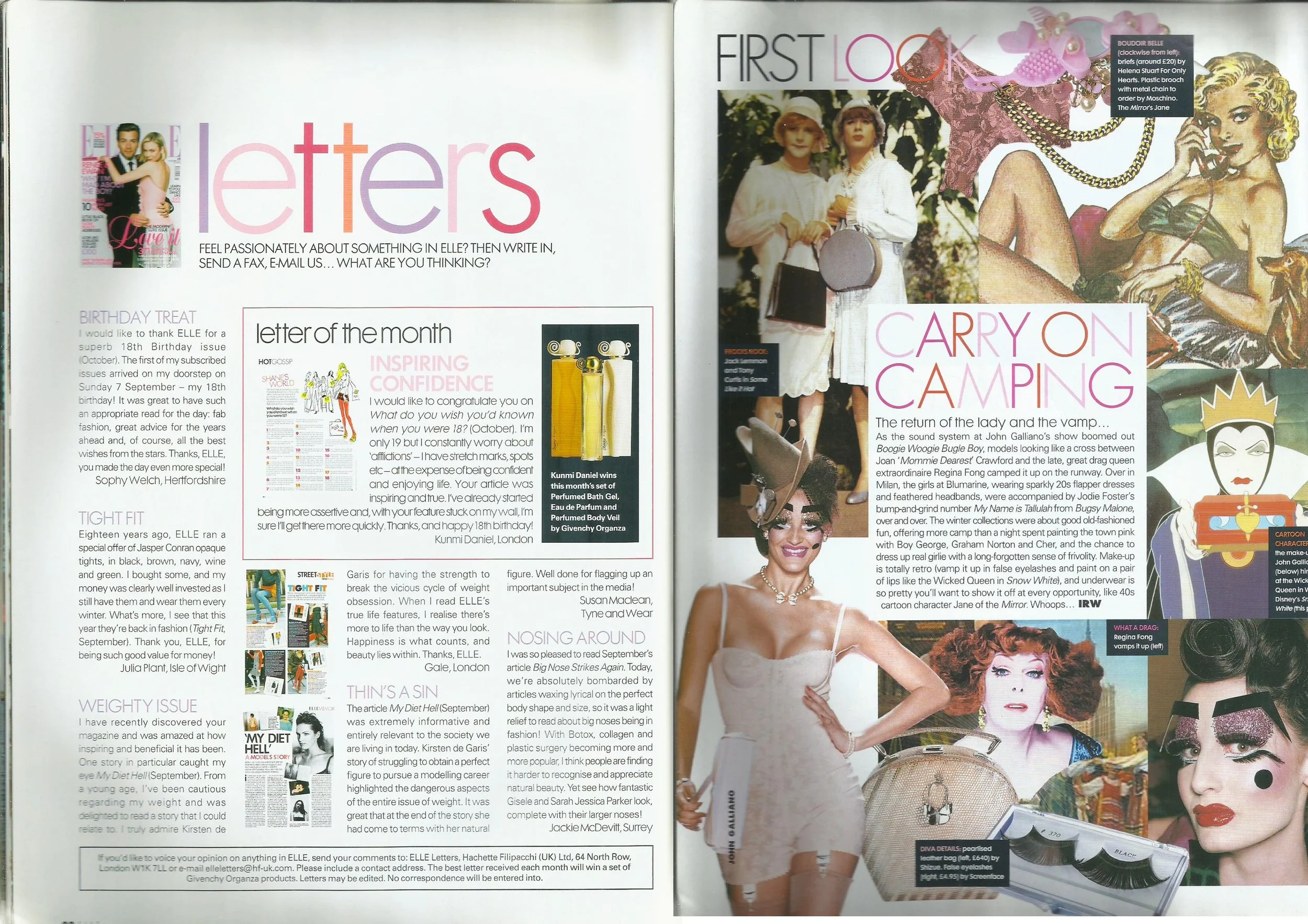
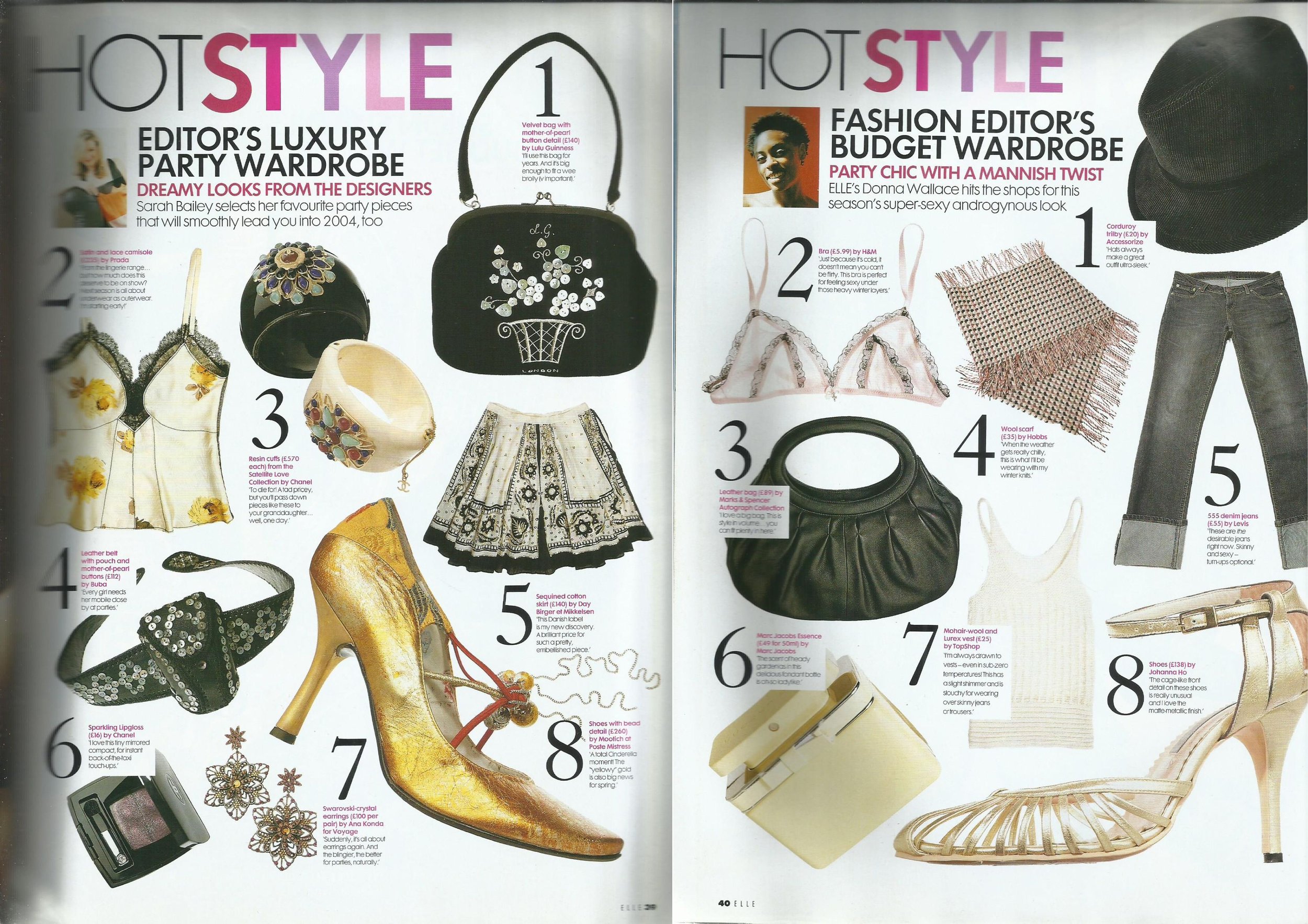
Typography was bold and colourful in the early 00s, there was a certain joyfulness about it.
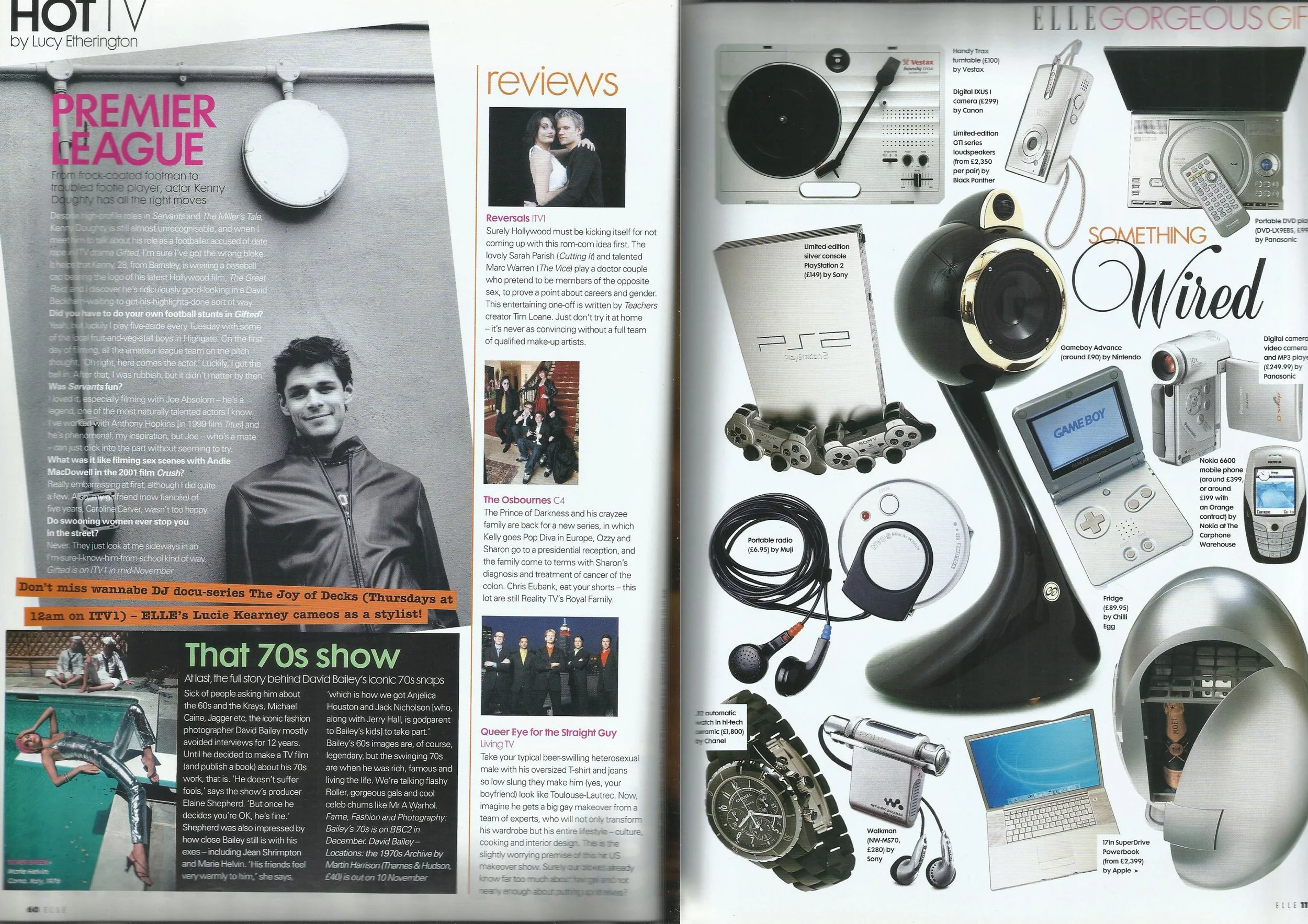
The gift guide, December 2003. Cutting-edge technology meant digital cameras and portable radios.
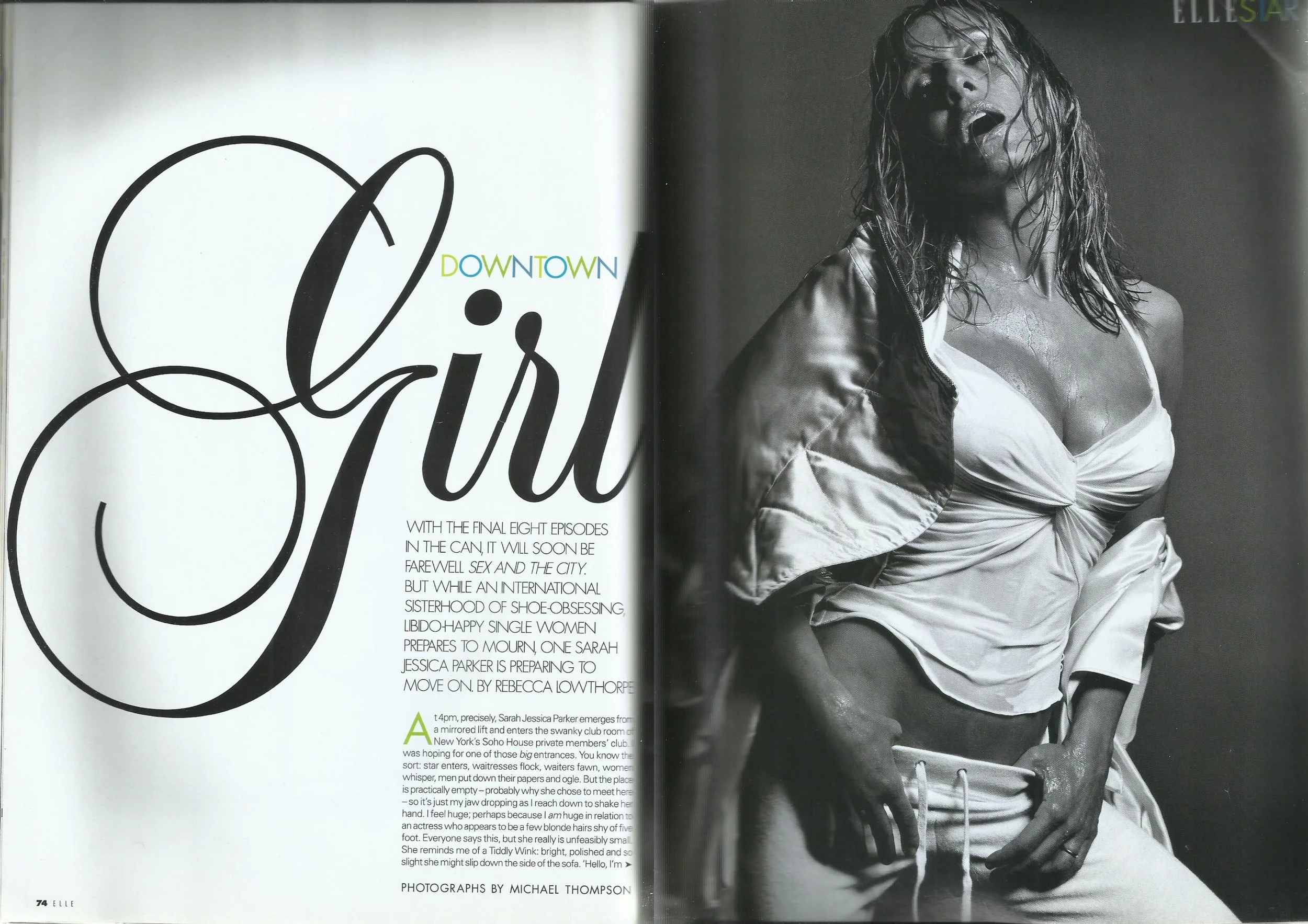
With Sex and the City drawing to a close Sarah Jessica Parker was at the absolute peak of her cultural moment as Carrie Bradshaw
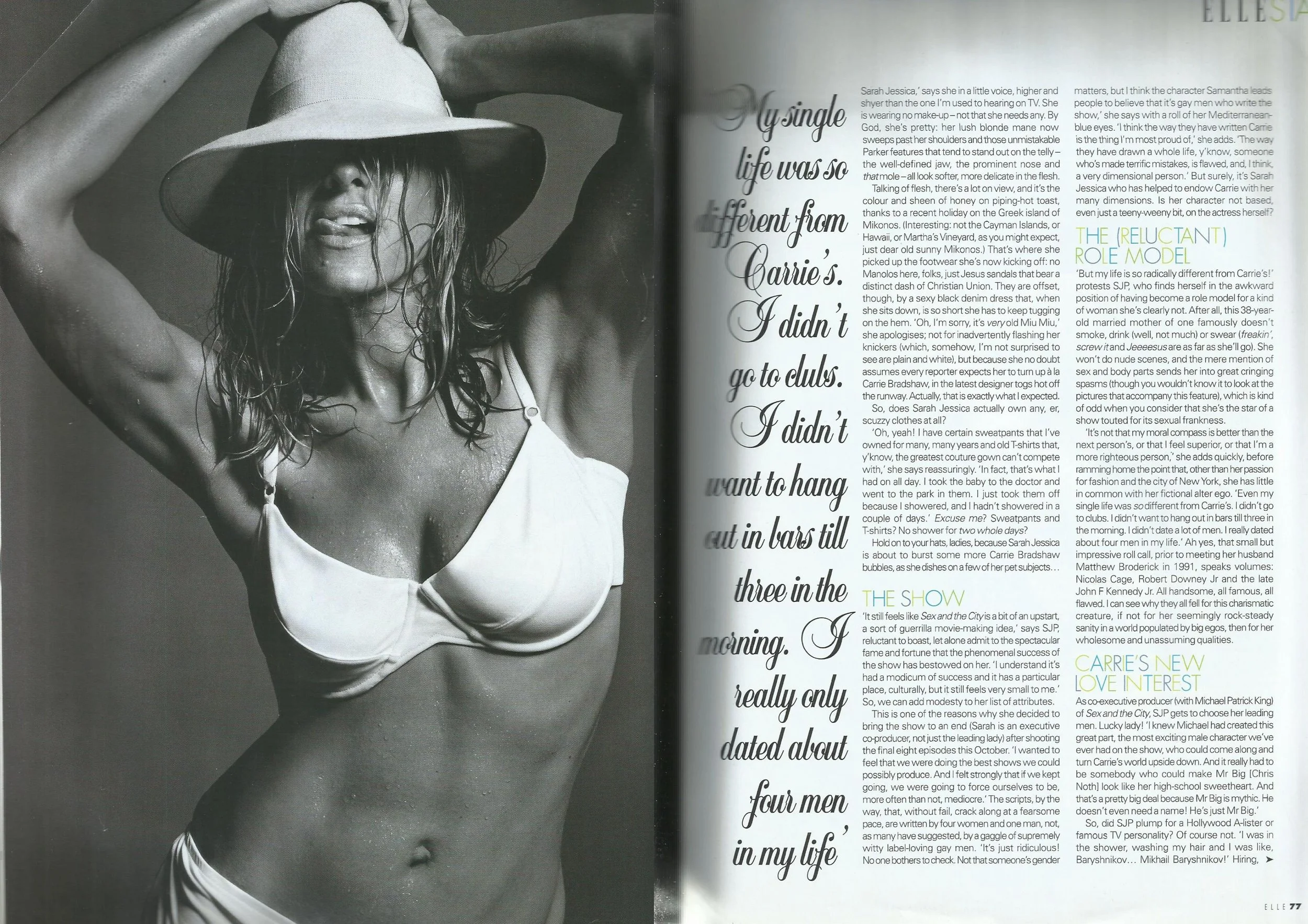
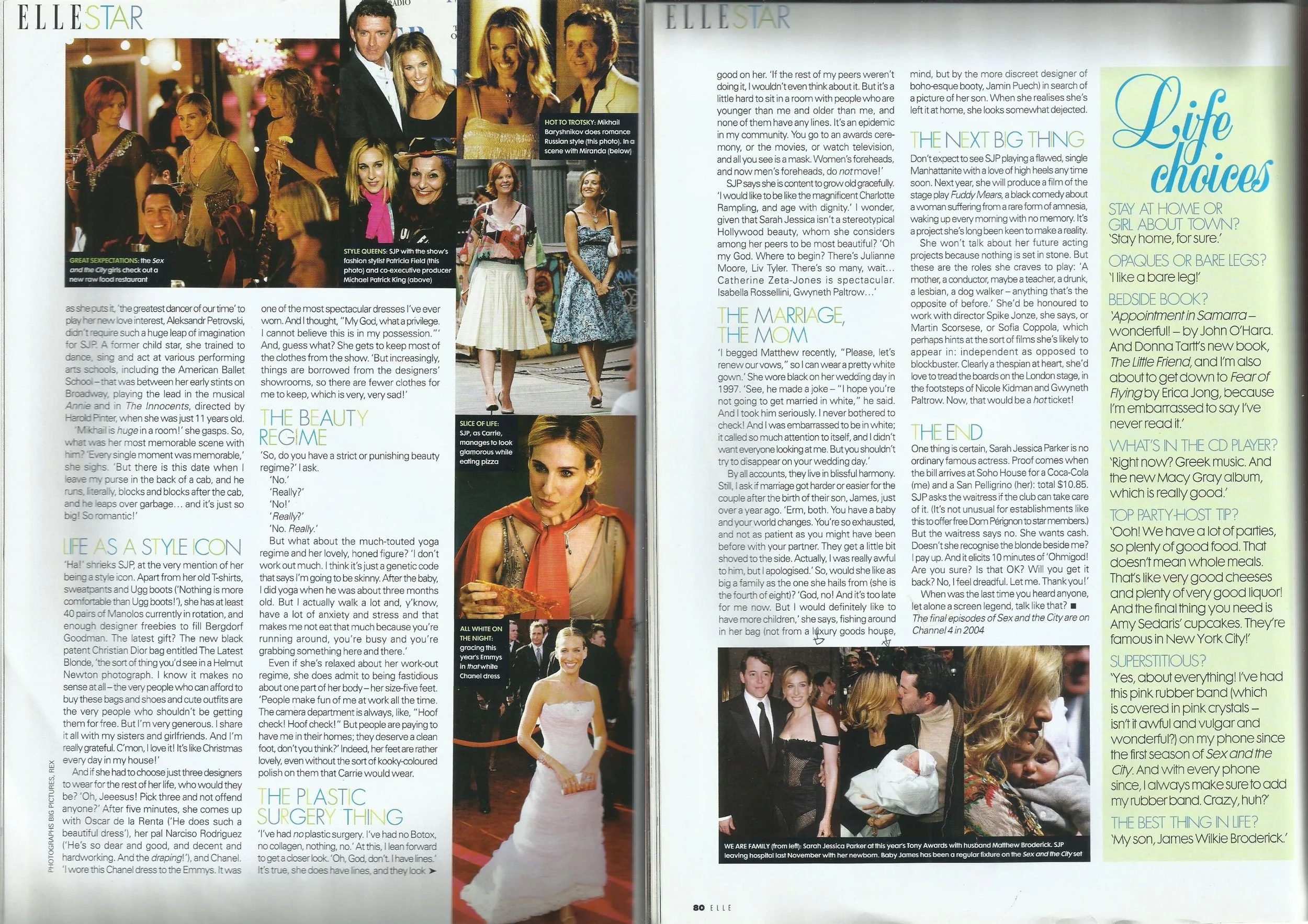
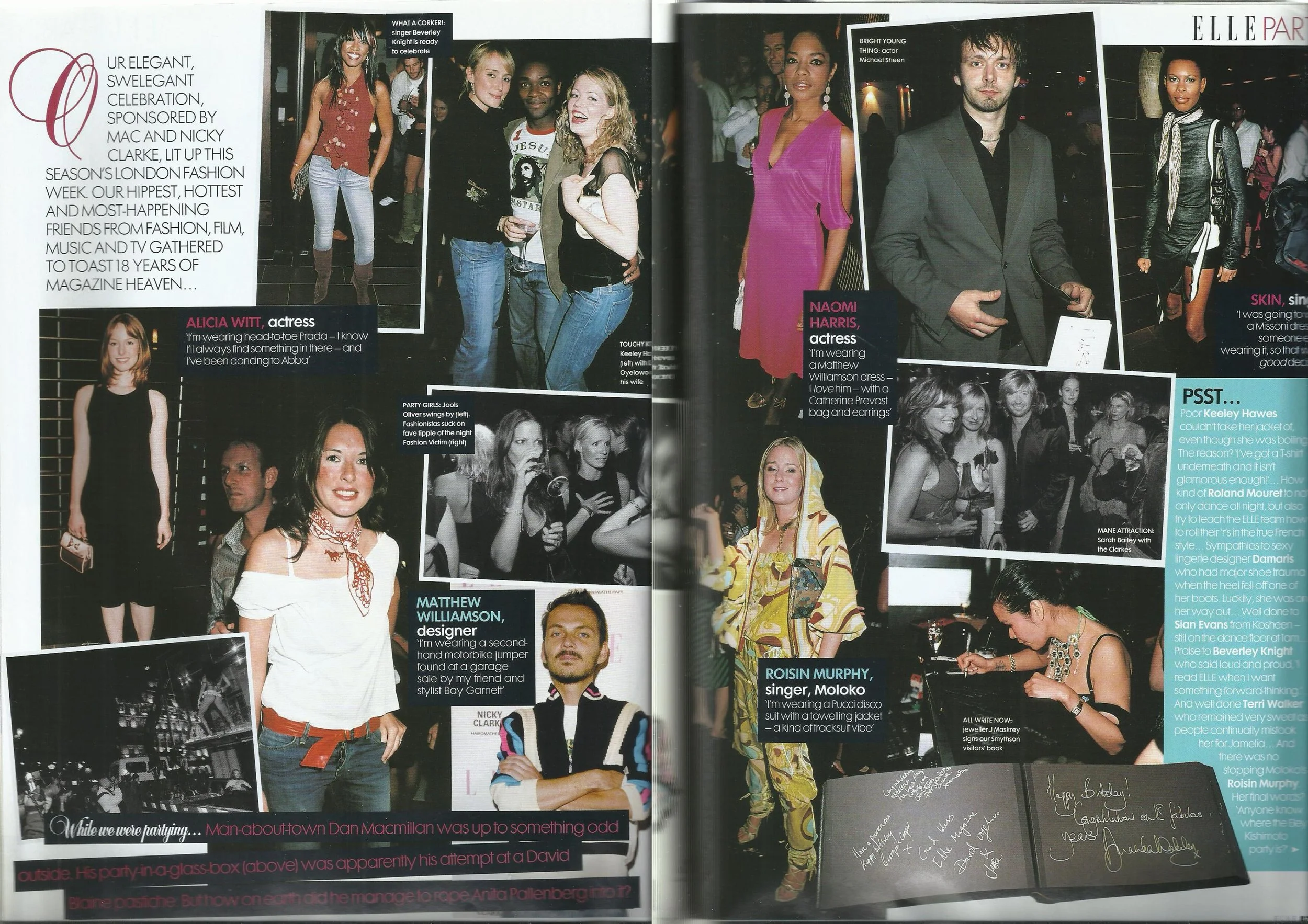
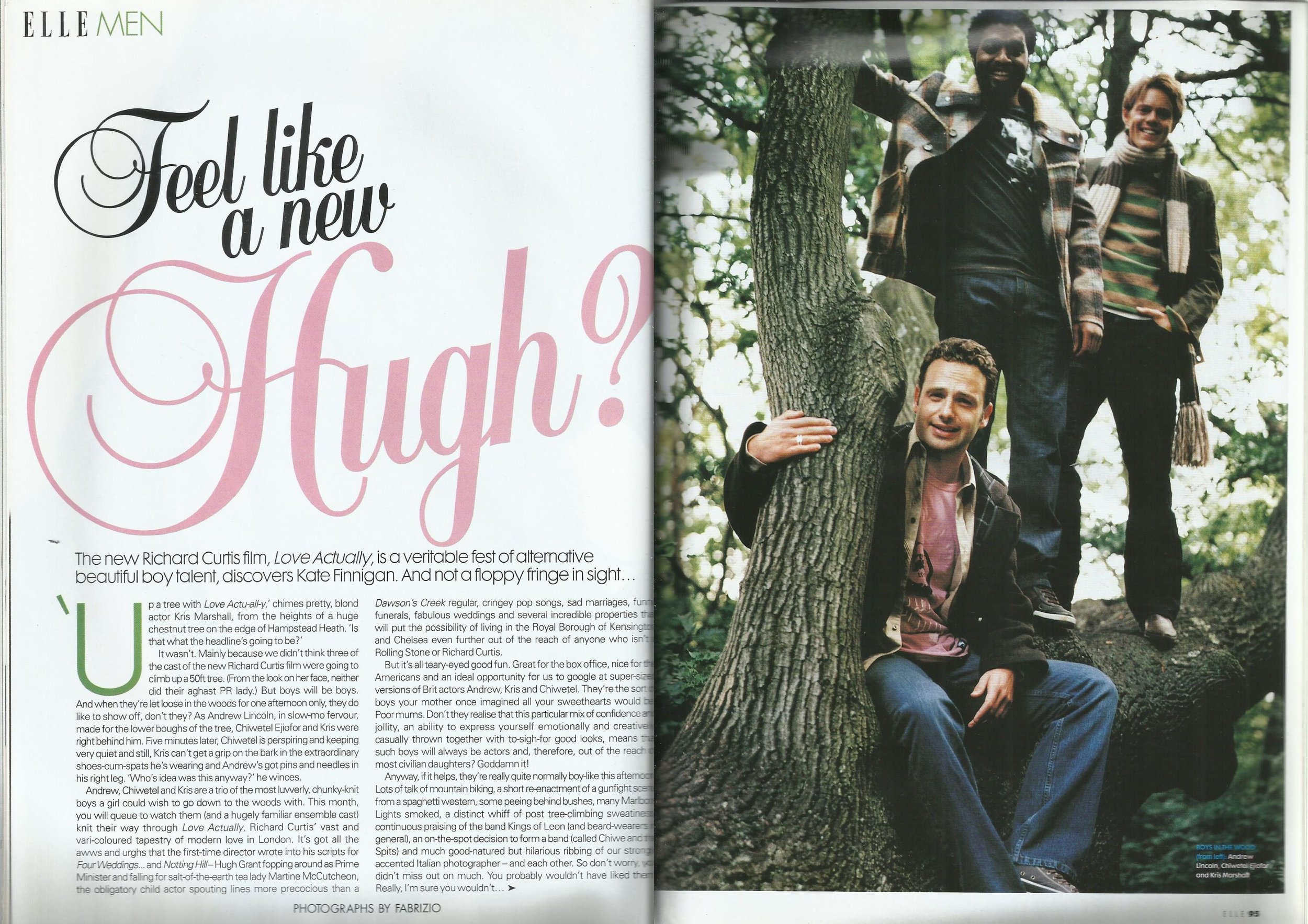
Love Actually had just come out in the cinema.
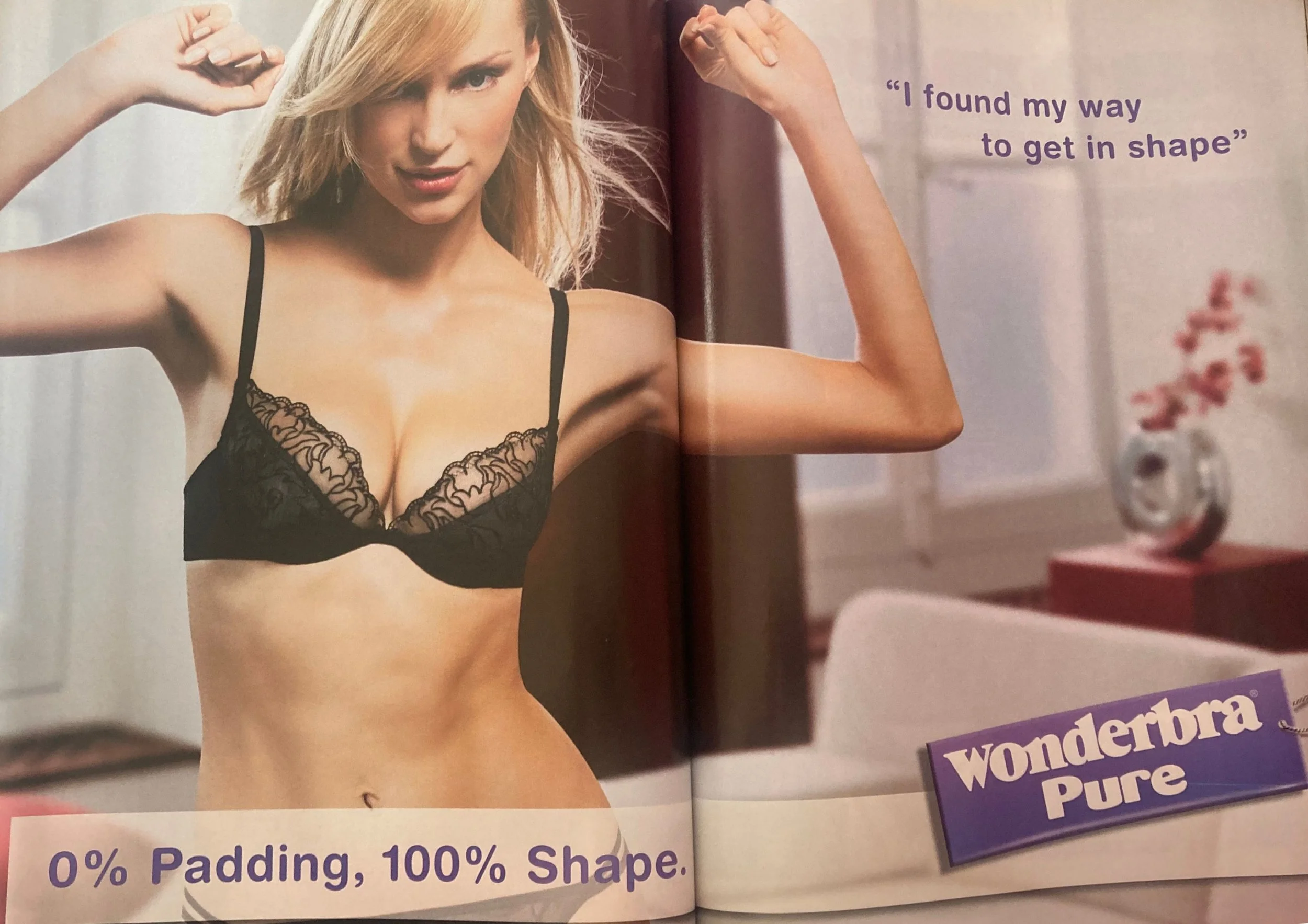
The Wonderbra gained huge popularity due to its revolutionary push-up technology and iconic ad campaigns, like the ‘94 “Hello boys” billboard featuring Eva Herzigová.
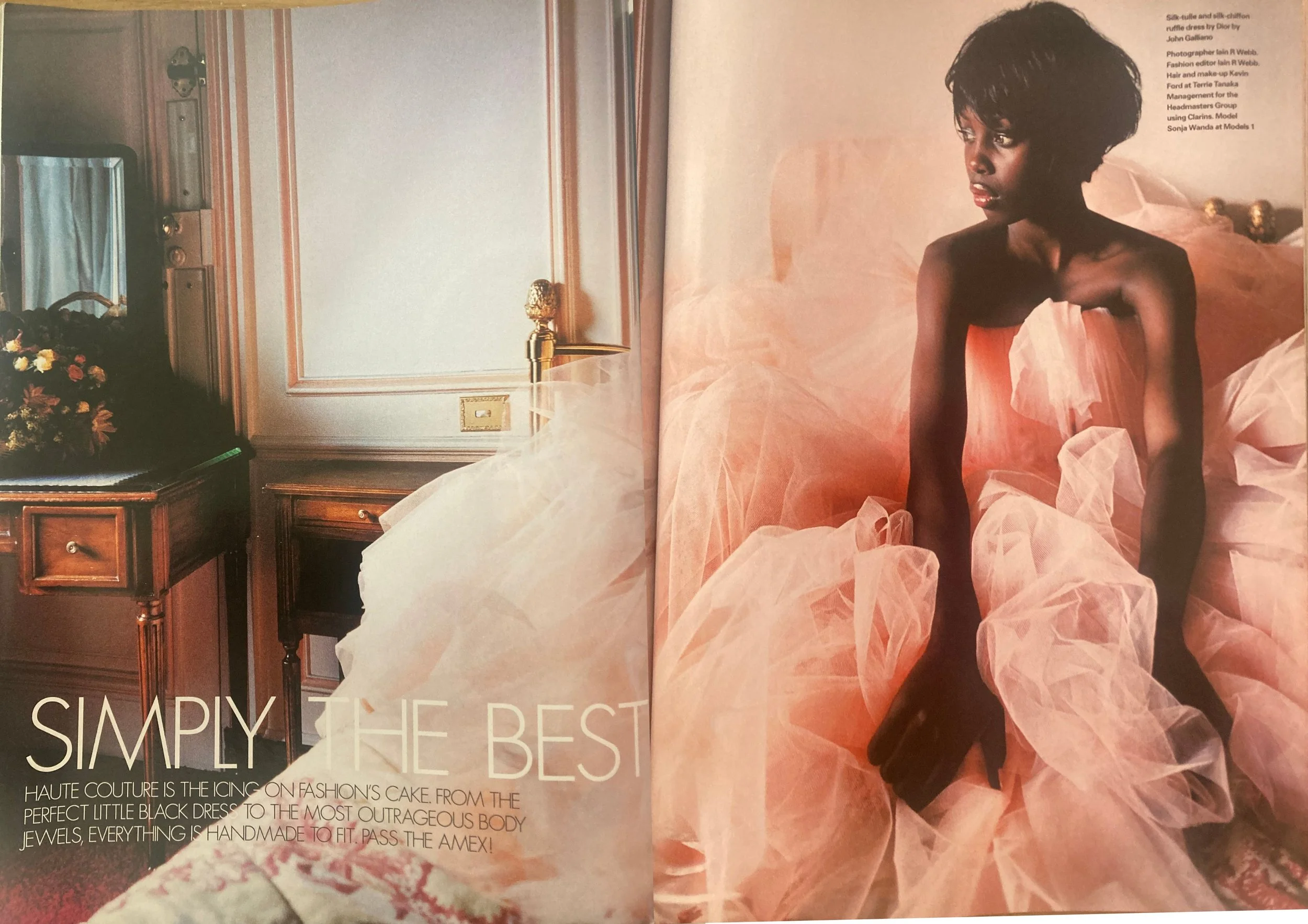
Photographer and Fashion Editor: Iain R Webb, Model: Sonja Wanda
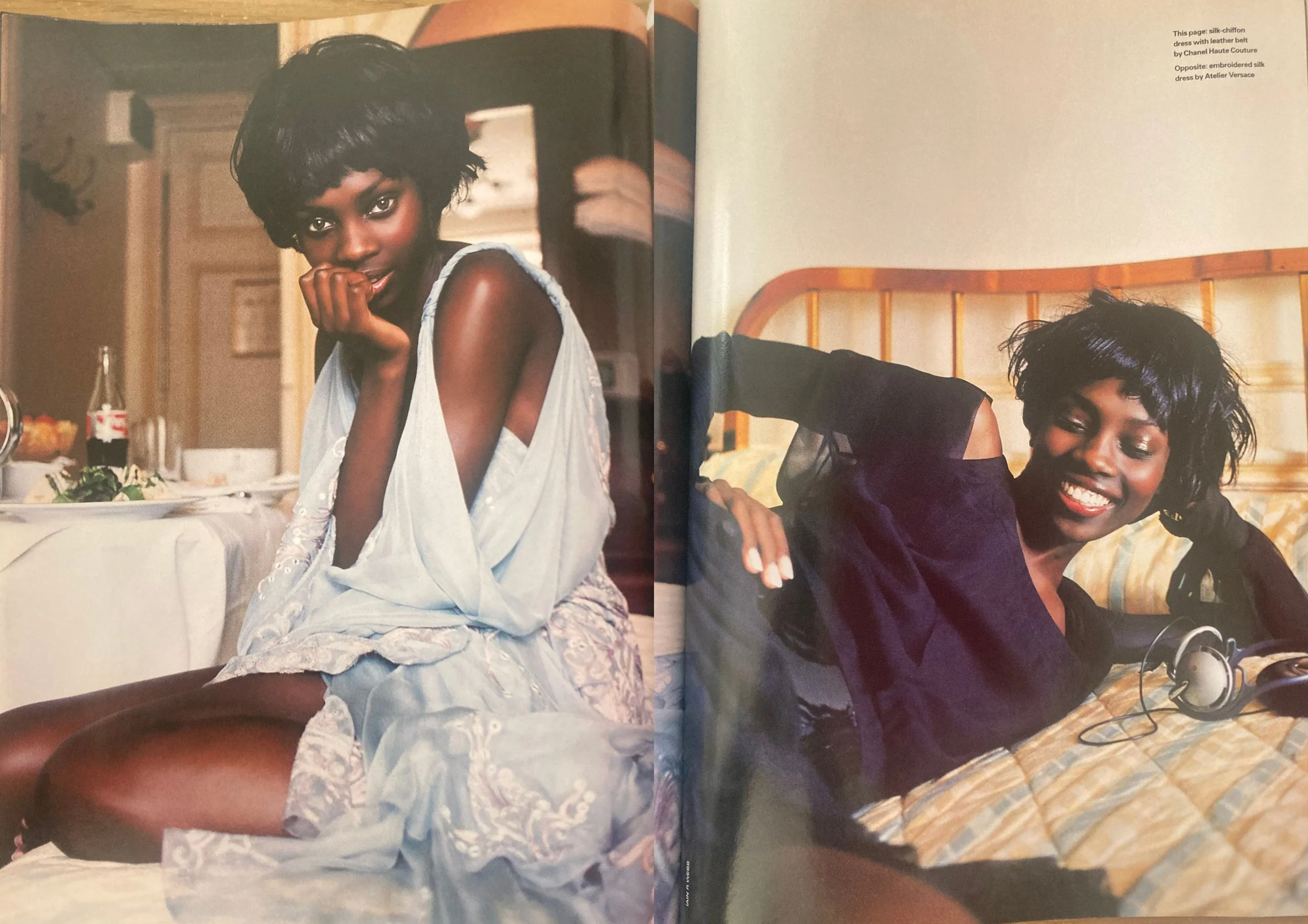
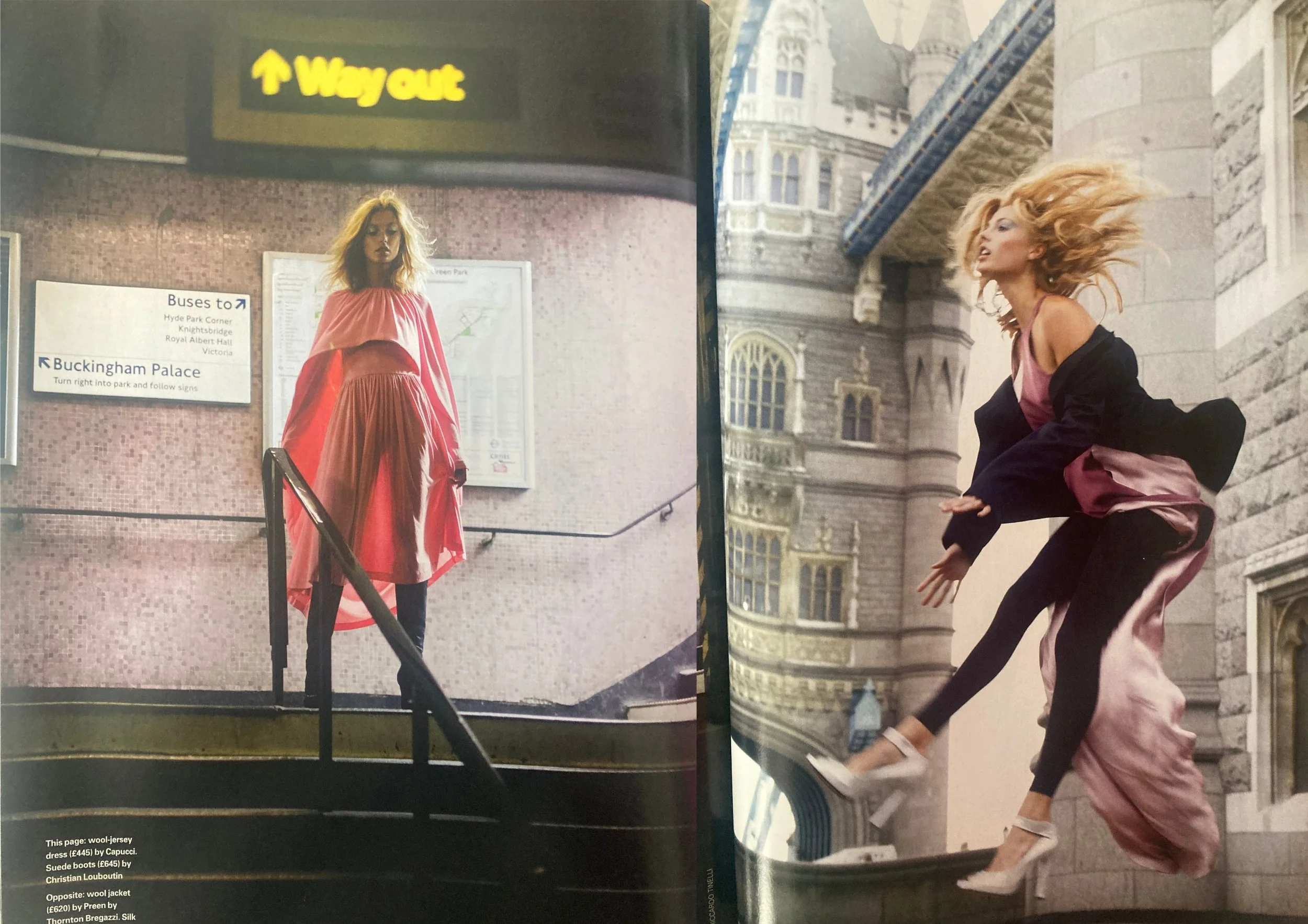
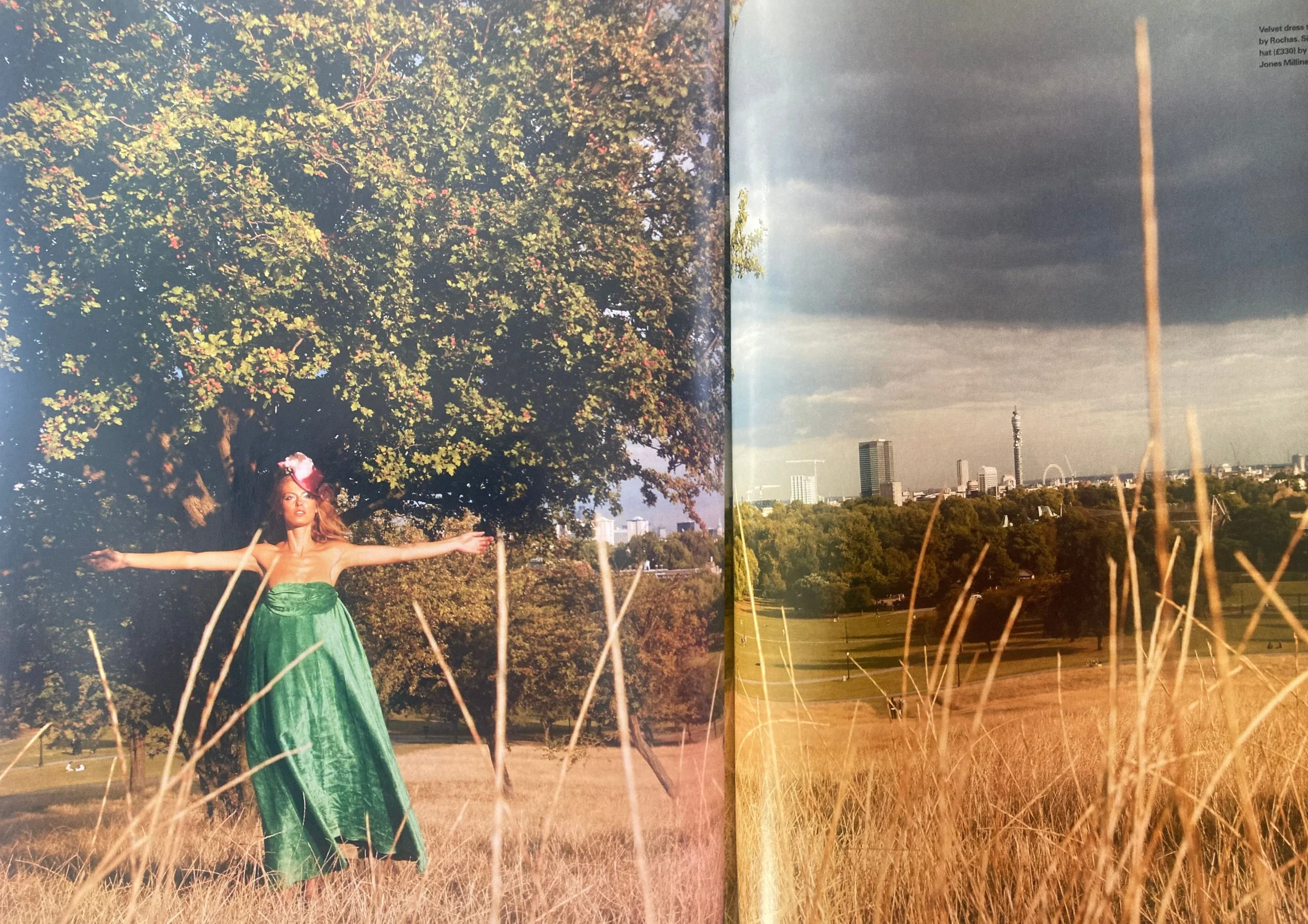
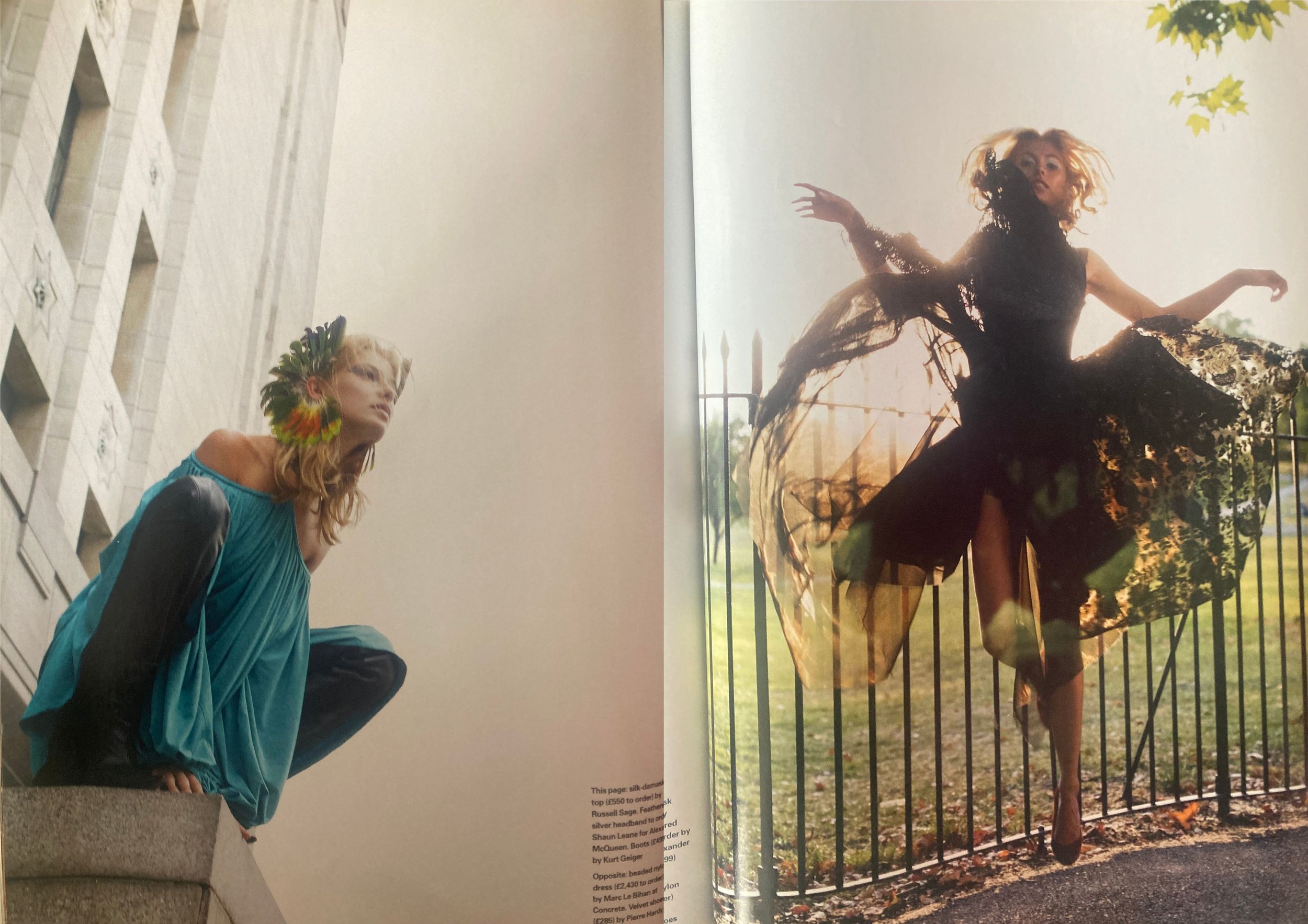
The editorials have a particular kind of joy to them — saturated, exuberant, unapologetically of their moment.
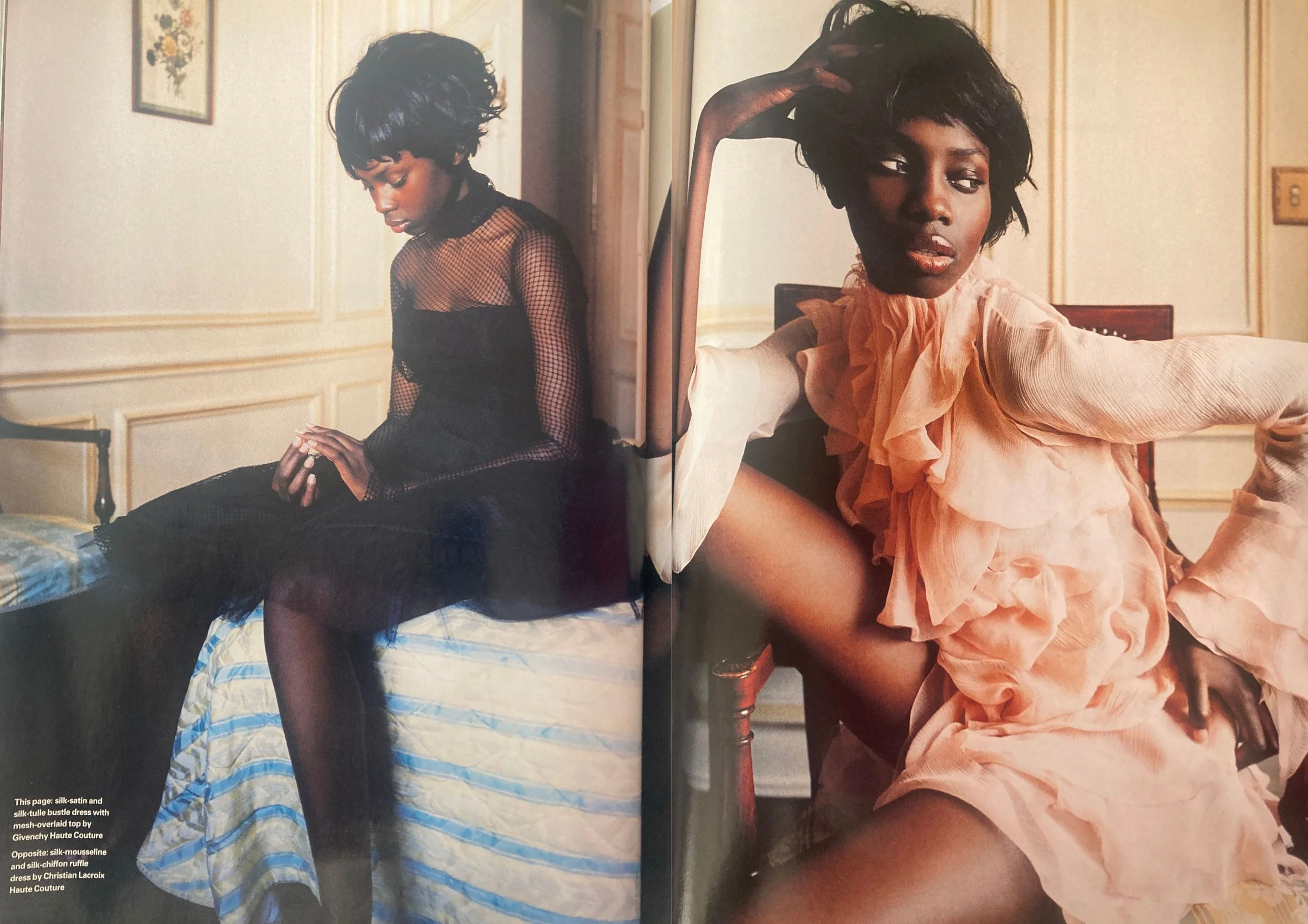
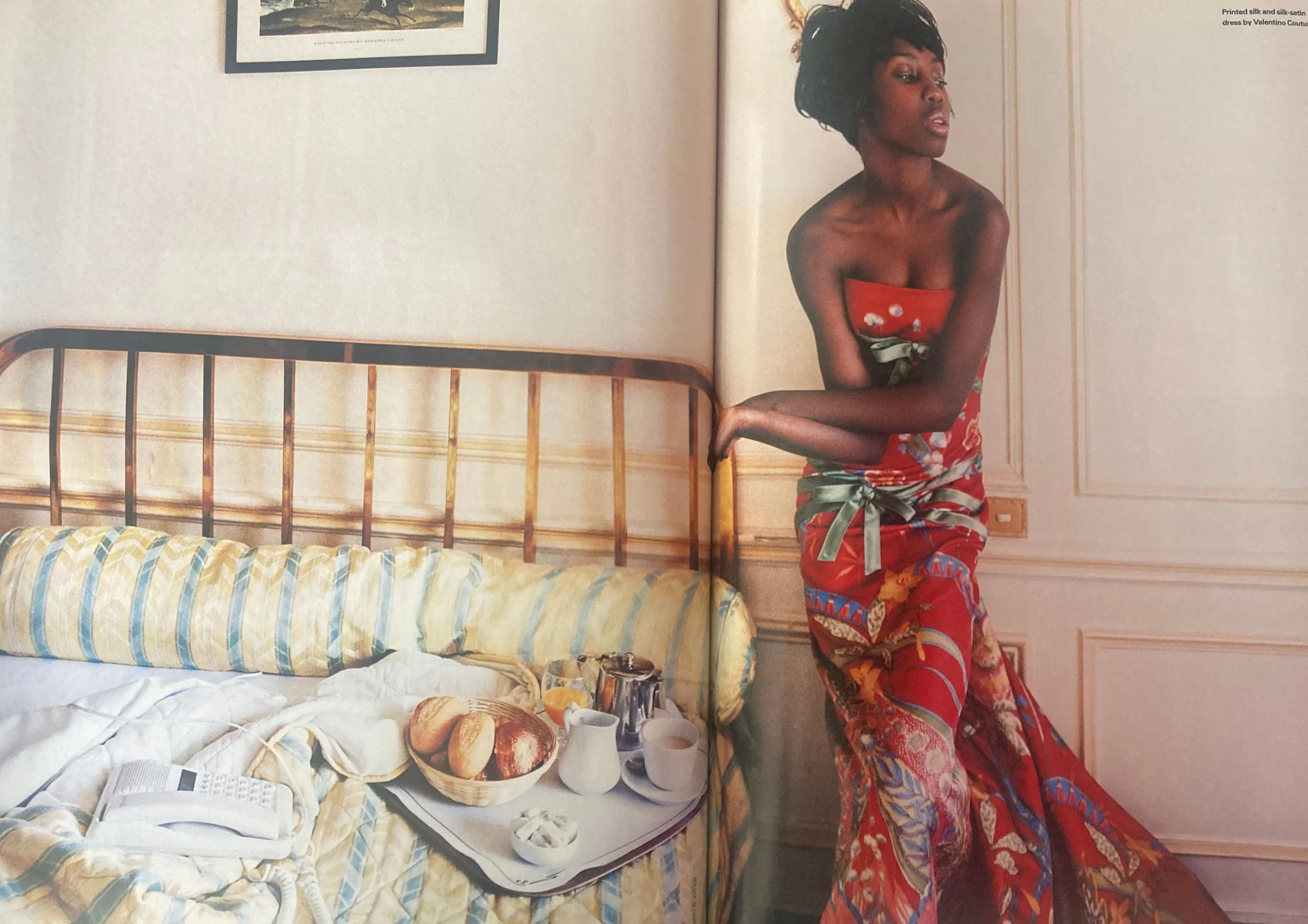
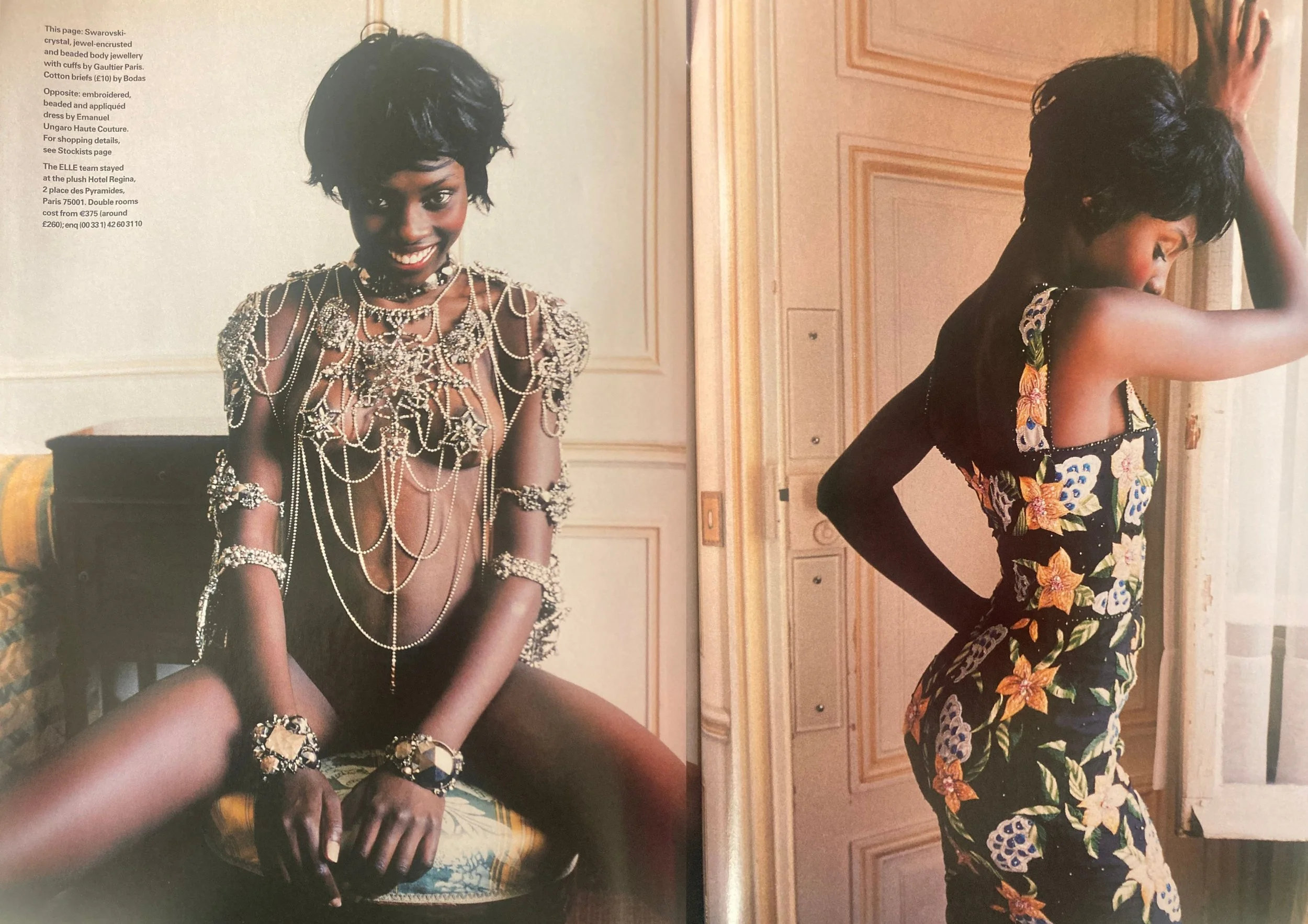
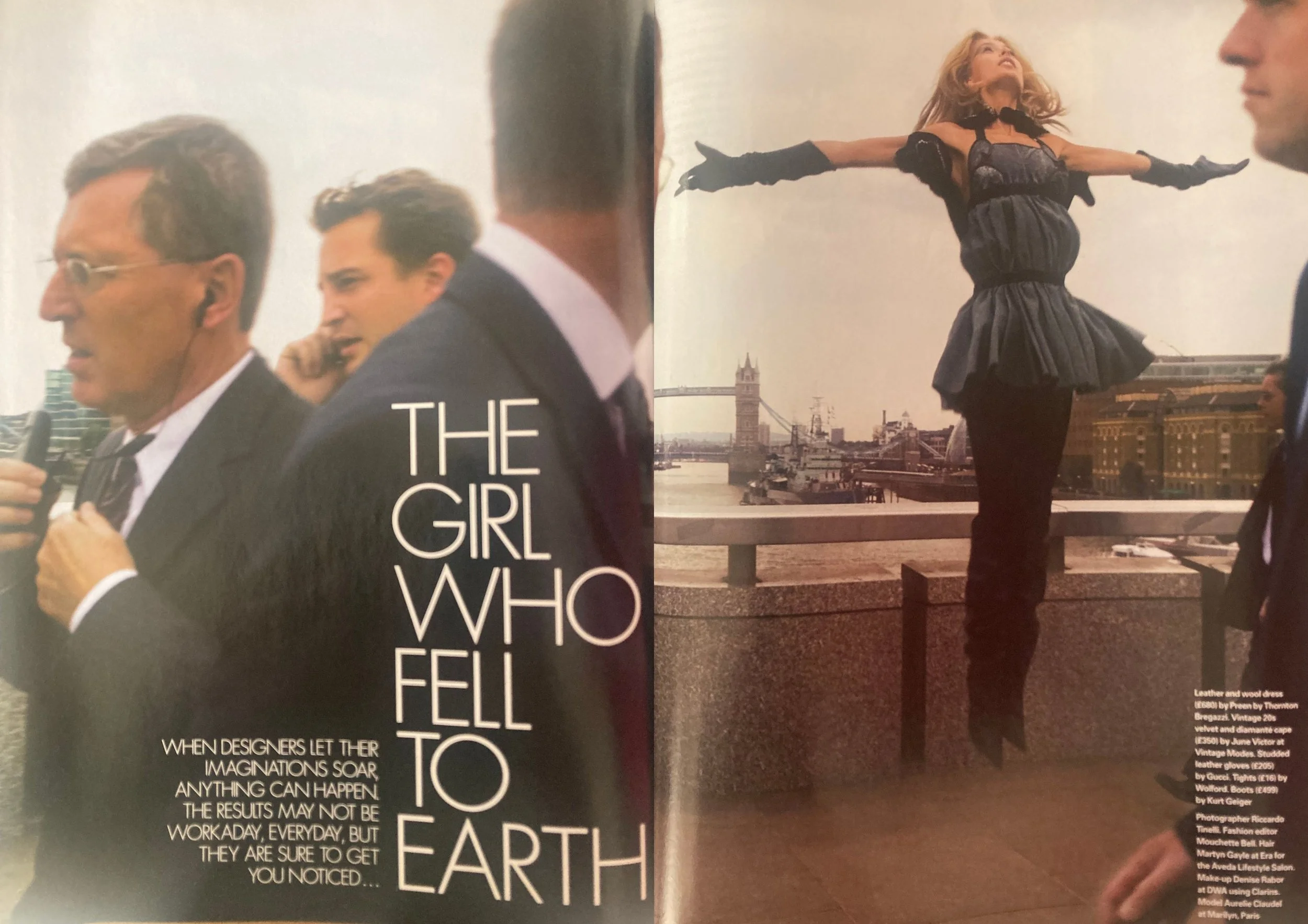
Photographer: Riccardo Tinelli, Fashion Editor: Mouchette Bell, Model: Aurelie Claudel
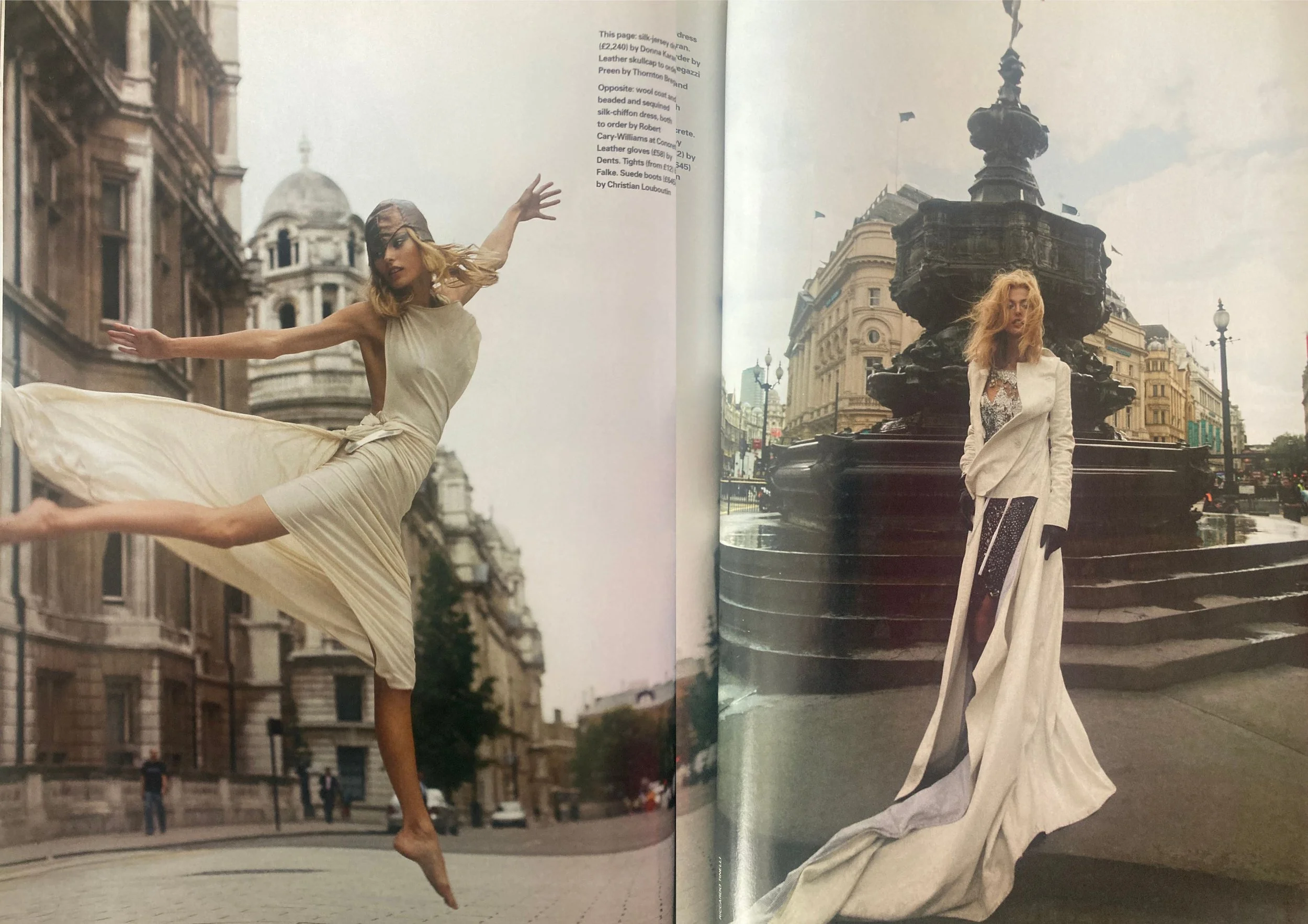
Fashion stories felt whimsical and there was not a hint of Ai insight.
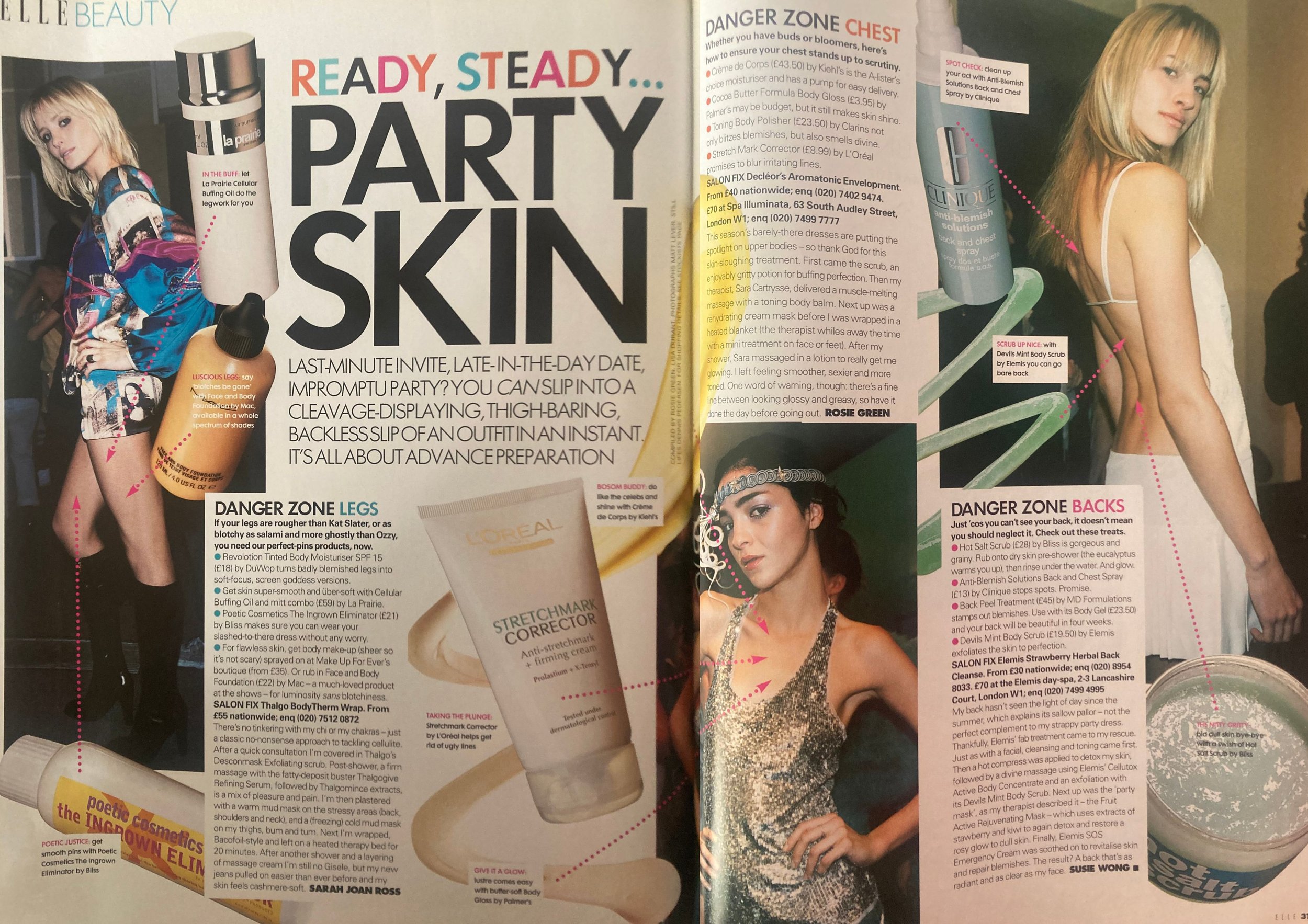
Early 00’s beauty standards were reflected in the pages of magazines, note the stretchmark corrector on the left hand side.