
Superfine Threads: Dandyism and power of Black style at the Met Gala– Part One
Every May, influential voices (according to the guest list… no shade) from the worlds of fashion, music, film, and pop culture gather for the Met Gala. It's an annual glittering parade of celebrity and spectacle cloaked in couture.
But this year’s theme cuts deeper than aesthetics. Superfine: Tailoring Black Style is a nod towards something far richer — a recognition of the craftsmanship, culture, and history embedded in Black sartorial expression.
To truly understand the significance of this theme, though, we have to go back. Before the red carpet, before the paparazzi, before the suit became a symbol of status, it was a uniform of quiet rebellion.
This two-part essay only scratches the surface of that history. But by tracing the roots of dandyism — from the crisp minimalism of Beau Brummell to the radical elegance of the Black dandy — it explores how tailoring became a language of power, performance, and self-definition.
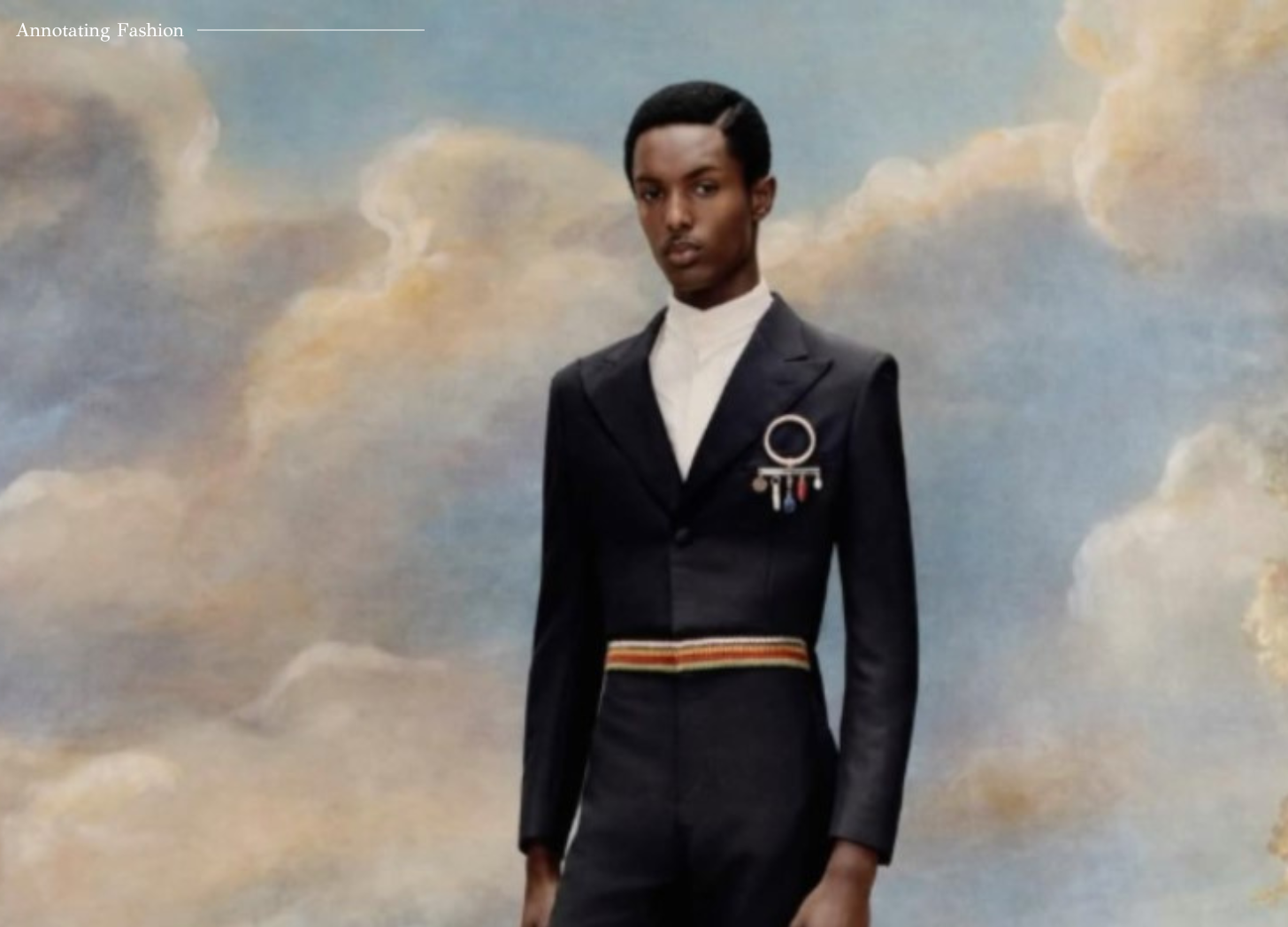
Credit: Wales Bonner instagram, 2025
Ah, the first Monday in May.
In the UK, it’s a public holiday—a welcome day off, if you’re lucky.
For fashion, it’s one of the most anticipated events in the industry’s calendar… the Met Gala.
Every year, the iconic steps of New York’s Metropolitan Museum of Art (or Met for short) transform into a grand, exclusive, and impossibly styled stage for all the world to see.
The gala is known for its elaborate and bustling red carpet, where guests appear in custom couture and high-fashion creations inspired by the year’s theme.
Originally founded in 1948 by Elenor Lambert and named The Costume Institute Benefit, the night is both a major fundraiser for the Met’s Costume Institute and the official opening of its annual fashion exhibition.
There’s always a buzz around the theme and the gala, who will and who should attend, which designer will dress which celebrity and will guests stick to the theme of the night or go rogue.
Beyond the fanfare and fundraising, the Met Gala operates as a cultural text. It sparks conversation—sometimes even controversy—about representation, identity, creativity, politics, and celebrity itself.
This year’s theme, “Superfine: Tailoring Black Style,” invites us to look deeper.
What does it mean to tailor Black style for the world’s gaze? Not just to wear it, but to craft it, archive it, and perform it with purpose.
What histories are being stitched into these garments—and who’s holding the needle?
To explore these questions, I turned to the exhibition’s key inspiration: Slaves to Fashion by Dr. Monica L. Miller. It’s a sharp and essential book that traces the history of Black dandyism across time and place
Miller argues that for Black people, style has always been more than aesthetics. It’s about self-making. Visibility. Rebellion. Control. It’s protest. It’s pleasure. It’s power.
So as the Met Gala invites us to reckon with the aesthetics of Blackness this year, we’re reminded: tailoring isn’t just a design technique.
It’s a “a strategy and a tool to rethink identity, to reimagine the self in a different context.” (Miller)
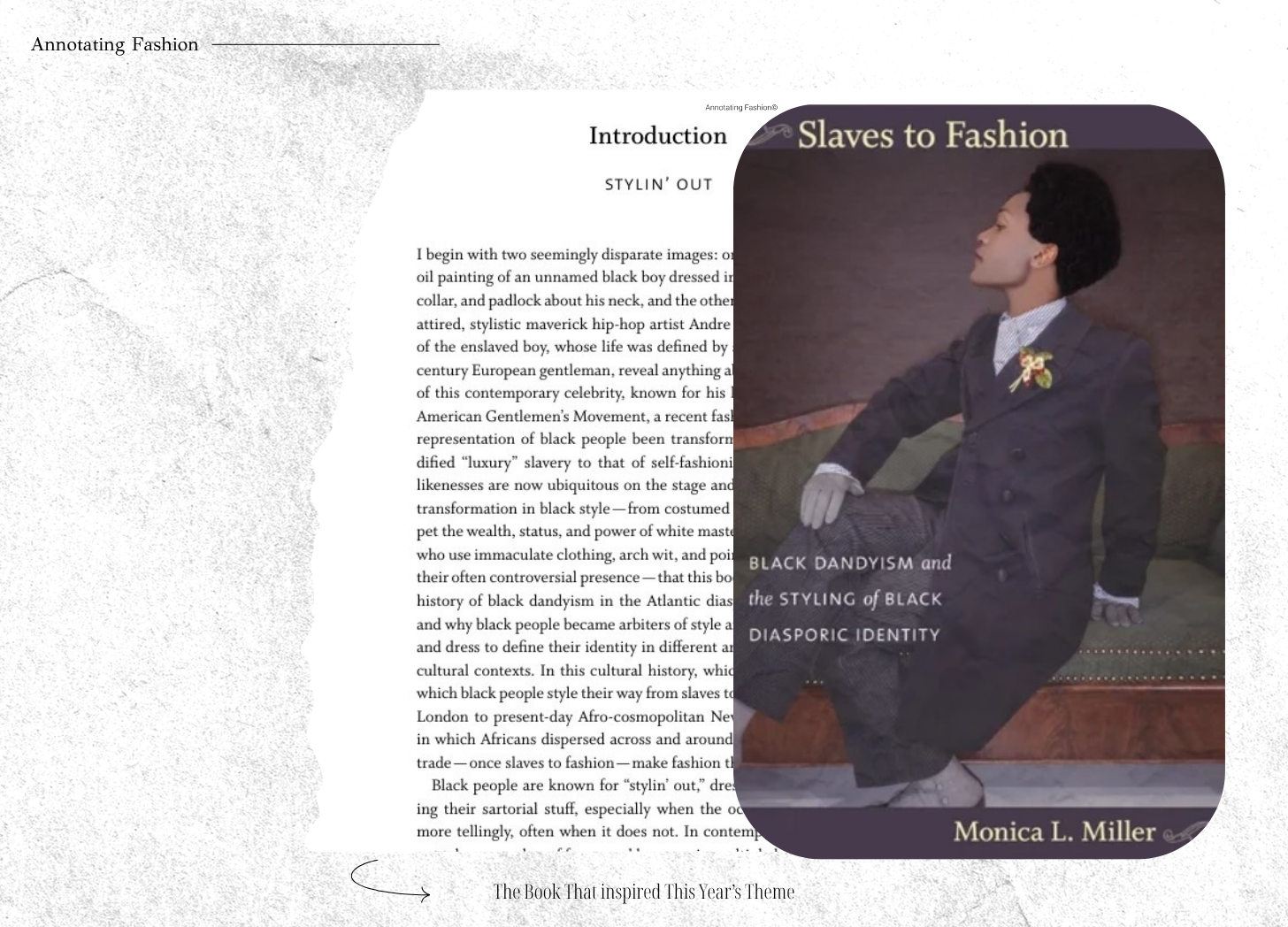
Miller, M.L. (2009) Slaves to Fashion : Black Dandyism and the Styling of Black Diasporic Identity. Duke University Press.
The theme of the 2025 Met Gala: Superfine, Tailoring Black Style
At first glance, “Superfine, Tailoring Black Style” is a celebration of the artistry and cultural significance of tailoring in black fashion.
But the inspiration behind it is nuanced and deeply layered. And there’s far more stitched beneath the seams.
Let’s start with the word “Superfine". In tailoring, superfine refers to high-quality fabrics made with exceptionally fine yarns. Commonly made from wool, it’s a popular choice for luxury suits, shirts and other formal wear.
Superfine fabrics are often associated with high-end tailoring, where precision and elegance are key.
It’s a word that speaks not just to style, but to status.
The inspiration of black dandyism highlights how tailoring has been used as a tool for self-expression, identity and resistance throughout history.
Superfine fabrics, known for their luxurious quality and precision align perfectly with this theme.
Historically, black dandies embraced high-quality materials such as superfine wool, silk infused textiles and cashmere blends to craft elegant and statement making ensembles.
These fabrics not only enhanced the sharpness of tailored garments, but they also symbolised sophistications and empowerment.
“Tailoring black style,” moves us firmly into the realm of intentional fashion. This isn’t just about wearing clothes—it’s about constructing identity. The role of tailoring in shaping Black identities across the Atlantic diaspora sits at the heart of the conversation.
In a recent YouTube roundtable hosted by Aria Hughes for Complex, cultural icons Dapper Dan, June Ambrose, and Ali Richmond break down the history and philosophy of Black style and dandyism.
Dapper Dan describes dandyism as an act of rebellion. “Dandies,” he says, “are rebellious and eccentric.”
Within Black communities, this rebellion took the form of self-fashioning—using style as a way to control the narrative, to push back against imposed limitations, and to stand out on one’s own terms.
The History of the Dandy: Beau Brummell and the Birth of the Look
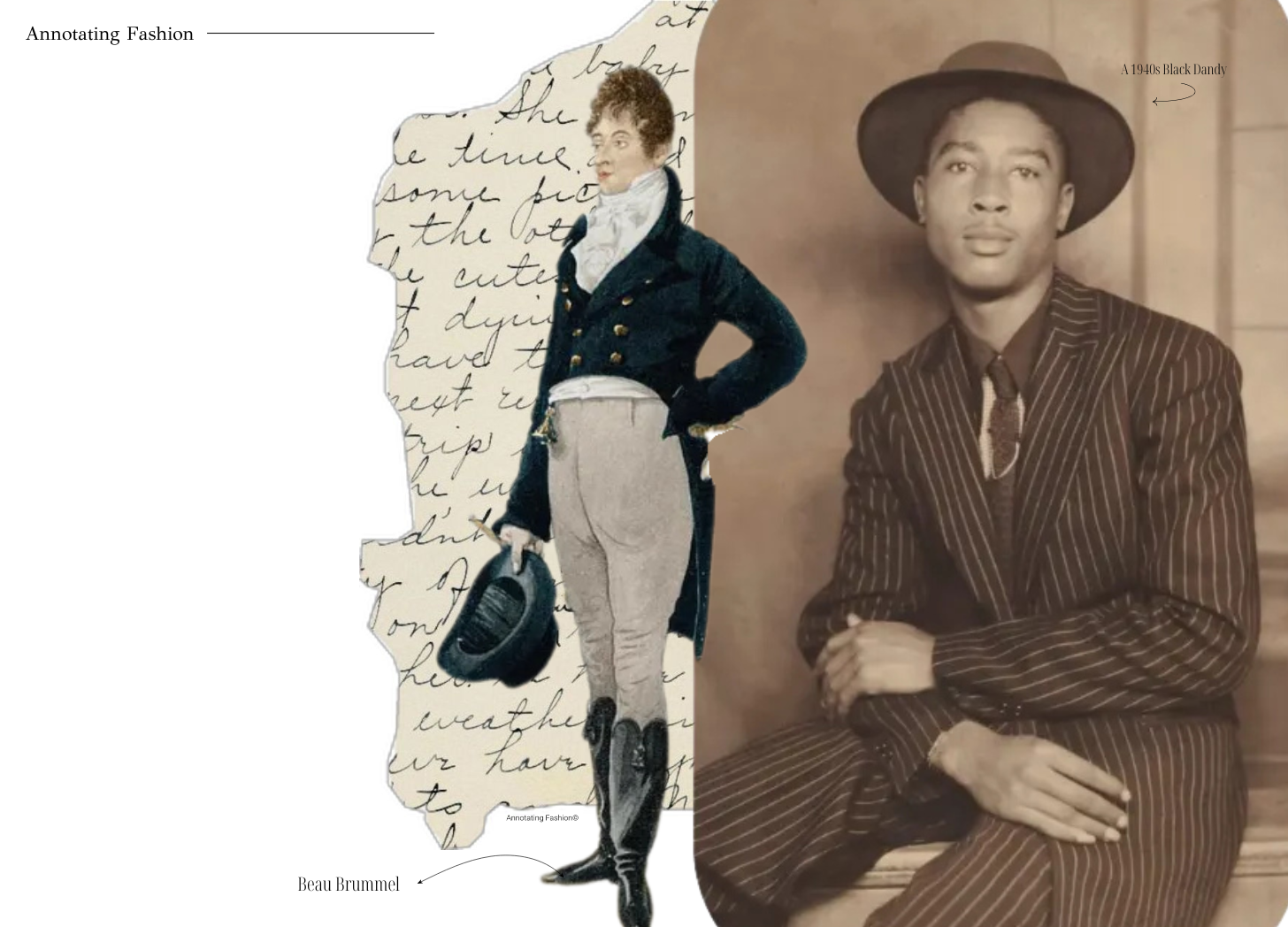
Credit: All things Georgian and Vogue.com
Before we dive deeper into the cultural impact of dandyism on Black identities and style, it’s worth looking back at where the term “dandy” actually comes from.
The dandy became a central figure in 19th-century ideas of masculinity and class.
He was meticulous in appearance, sophisticated in manner—and full of contradictions.
He embraced elegance and refinement , but he rebelled against high society, He borrowed from femininity in taste and dress, yet rejected womanhood. Style was his armour, but also his rebellion.
Still, the dandy didn’t appear out of nowhere.
His roots can be traced back to the 17th-century fops — men seen as foolishly obsessed with fashion and vanity.
Then came the macaronis of 18th-century Britain—young upper-class men who returned from Europe with exaggerated tastes: powdered wigs, tight breeches, and a flair for the dramatic. They were admired and ridiculed in equal measure.
Then came Beau Brummell, the archetypal dandy of the Regency era—and arguably the original menswear influencer.
He rejected the ornate prints and powdered wigs of the time, favouring fine linen shirts and bespoke suits in muted tones. His look was clean, sharp, and effortlessly polished.
Brummell's influence reshaped menswear and left a legacy that still echoes through fashion today. But while dandyism is often associated with this white, upper-class image, its story doesn’t end there.
In Slaves to Fashion, author and professor, Dr. Monica L. Miller explores how Black individuals across the Atlantic world appropriated the language of dandyism, transforming clothing into a medium of expression, visibility, and resistance.
She writes that "black dandyism has been an important part of and visualisation of the negotiation between slavery and freedom."
Dandyism was initially imposed on Black men in 18th-century Europe. The rise of consumer culture during the Atlantic slave trade created a trend of fashionably dressed Black servants, often styled by their employers as walking status symbols. These "luxury slaves" were adorned in fine fabrics and elaborate attire, serving as living displays of wealth and taste.
But over time, dandyism offered black people an opportunity to use clothing, gesture, irony and wit to transform their given identities and imagine new ways of embodying political and social possibilities.
Today’s Black dandies include style icons like the late André Leon Talley, André 3000, Fonzworth Bentley, Dapper Dan, June Ambrose, Janelle Monáe, and Rihanna — to name just a few.
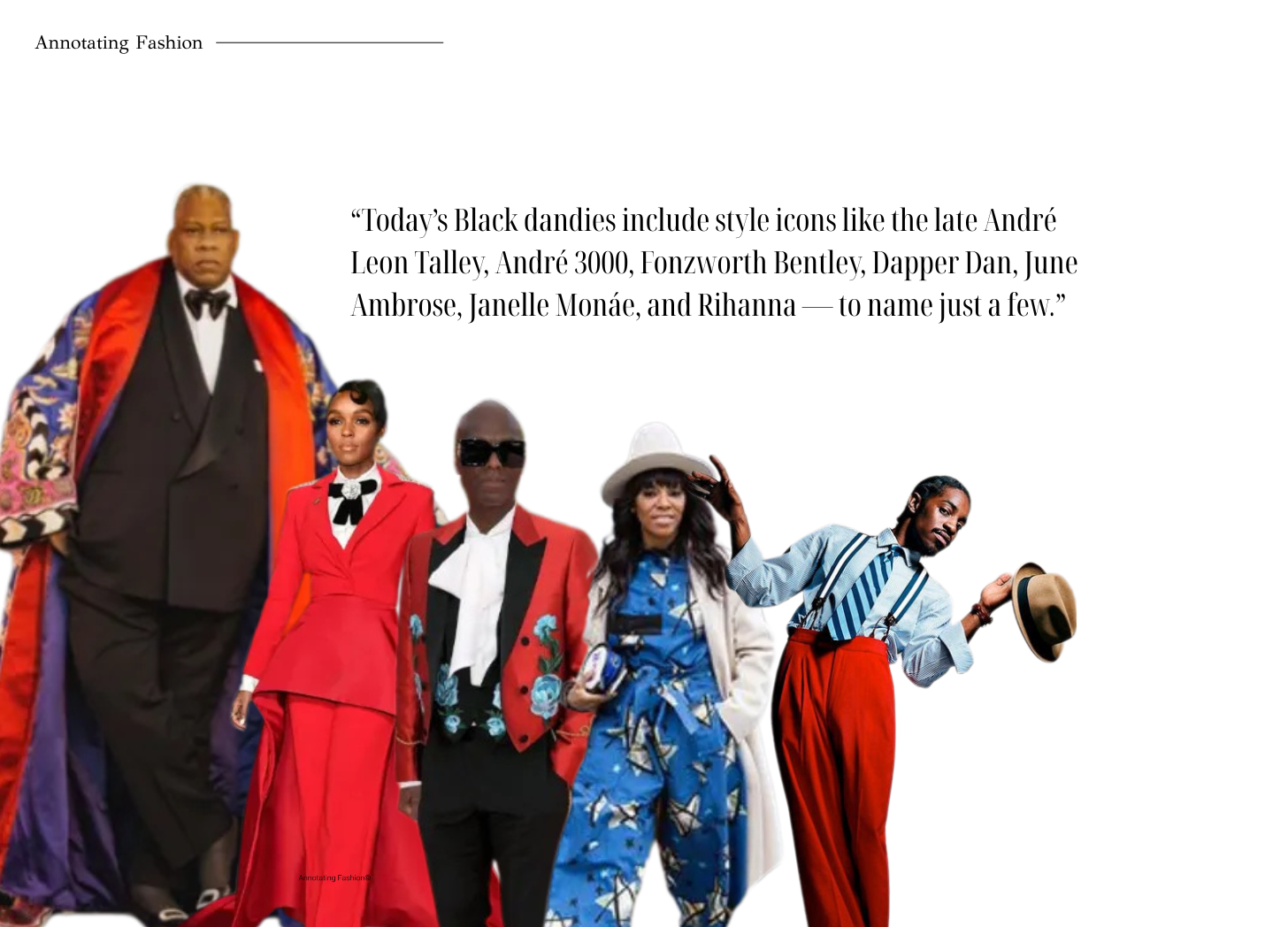
collaged for illustrative/educational purposes
From 17th-century fops to 18th-century macaronis to 19th-century Brummell, the dandy’s silhouette has always been more than just a look — it’s been a statement.
But what happens when that silhouette is reclaimed, reimagined, and adopted by Black style?
In Part Two, we move from 19th-century England to the steps of the Met Gala, exploring how the Black dandy redefined the rules — turning tailoring into both a tool of resistance and an art form.
Image Credit Disclaimer
I do not own the rights to any of the images featured above. I have made every effort to credit photographers and creators as accurately as possible. However, if any credit has been missed or attributed incorrectly, please do let me know so I can amend it promptly.