
Superfine Threads: Dandyism and power of Black style at the Met Gala-Part Two
In Part One, we traced the dandy’s origin story — a man of taste, restraint, and defiant polish.
We were introduced to the inspiration behind this year’s theme: Slaves to Fashion by Dr. Monica L. Miller.
And we explored how Black individuals across the Atlantic world appropriated the language of dandyism, transforming clothing into a medium of expression, visibility, and resistance.
In this second half, we explore how Black style has wielded tailoring as a tool of resistance. We’ll examine the politics of the Met Gala guest list, and how this year, it offers Black creatives, artists, and cultural voices a rare opportunity to communicate identity through the language of fashion.
The Black Dandy: Style as Resistance
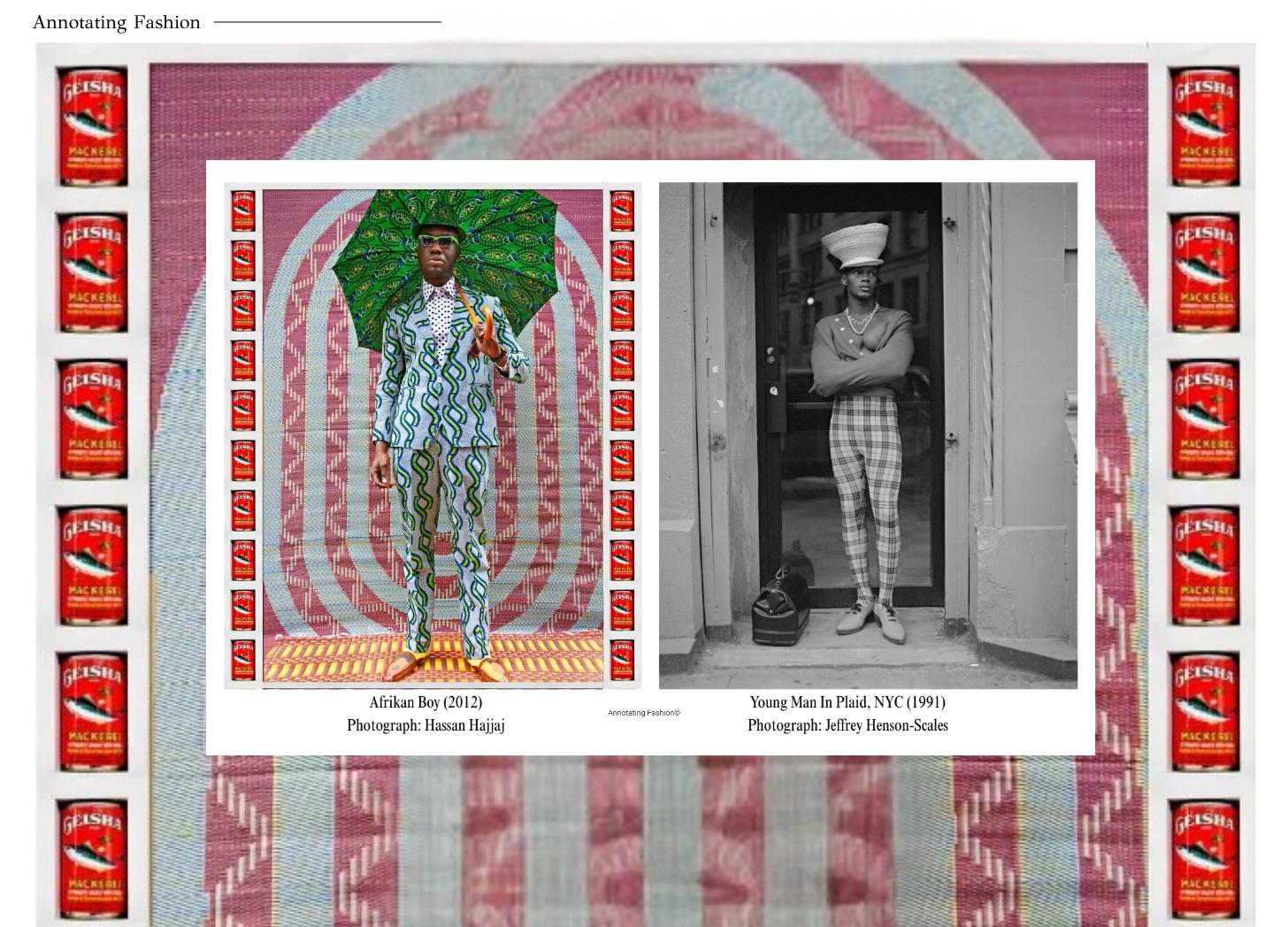
Credit: The Guardian
To dress as a dandy was to flip the script, turning style from surface-level into something deeper: a form of storytelling, rooted in rebellion and resilience.
“ As a form of cultural resistance Black dandyism functions as a kind of fashionable “weapon of the weak,” an “everyday form of resistance” the enslaved and marginalised use to comment on their relationship to authority.”
- Monica L. Miller, Slaves to Fashion
While some young Black boys were acquired as “luxury items” others found themselves with a very different relationship to adornment.
They arrived on the shores of America stripped of most of their possessions and native dress.
What they carried instead were small pieces of jewellery — beads worn around the neck, arms, and waist — and a rag or piece of leather the size of a fig leaf to cover their modesty.
These pieces held powerful memories and were the only material retention from their former lives in Africa.
The enslaved collected small accessories of precious or shiny beads, buttons and ribbons to affix to their clothing and augment their standard issued coarse uniforms as a gesture of memory, individuality and subversion.
These objects of personal adornment and how they were displayed mattered to the materially deprived captives.
For people denied autonomy, clothing became a powerful symbol of selfhood and freedom.
As Dr Jonathan Michael Square, part of the Met exhibition’s advisory committee, explains:
“Post-emancipation, fashion became a way for Black men to claim space in a society that sought to deny them full citizenship.”
By reinterpreting European dress with individuality and flair, Black dandies challenged the idea that elegance and upward mobility belonged to whiteness alone, they used fashion to reclaim dignity within exclusionary societies.
“Being a Black dandy means embracing fashion as a lifestyle — diverse, expansive, and deeply expressive. Throughout history, Black men’s agency has been policed, but as they gained freedom, fashion became a powerful tool of rebellion, asserting individuality within imposed structures in ways that could not be ignored.”
- Tianni Graham, fashion historian and Principal Archivist at Thom Browne
These ways include how the Black dandy disrupts and challenges our expectations of race, class, gender and masculinity, existing in a space between masculine and feminine, homosexual and heterosexual, appearance and reality while reinterpreting Eurocentric fashion through their own lens.
And over the years, Black dandyism has come to reflect a broader performance of Black identity, not just what is worn, but how it is worn. It’s performative and intentional, disrupting social expectations and rewriting what visibility looks like.
The Met Gala as Spectacle: Who’s Actually Seen?
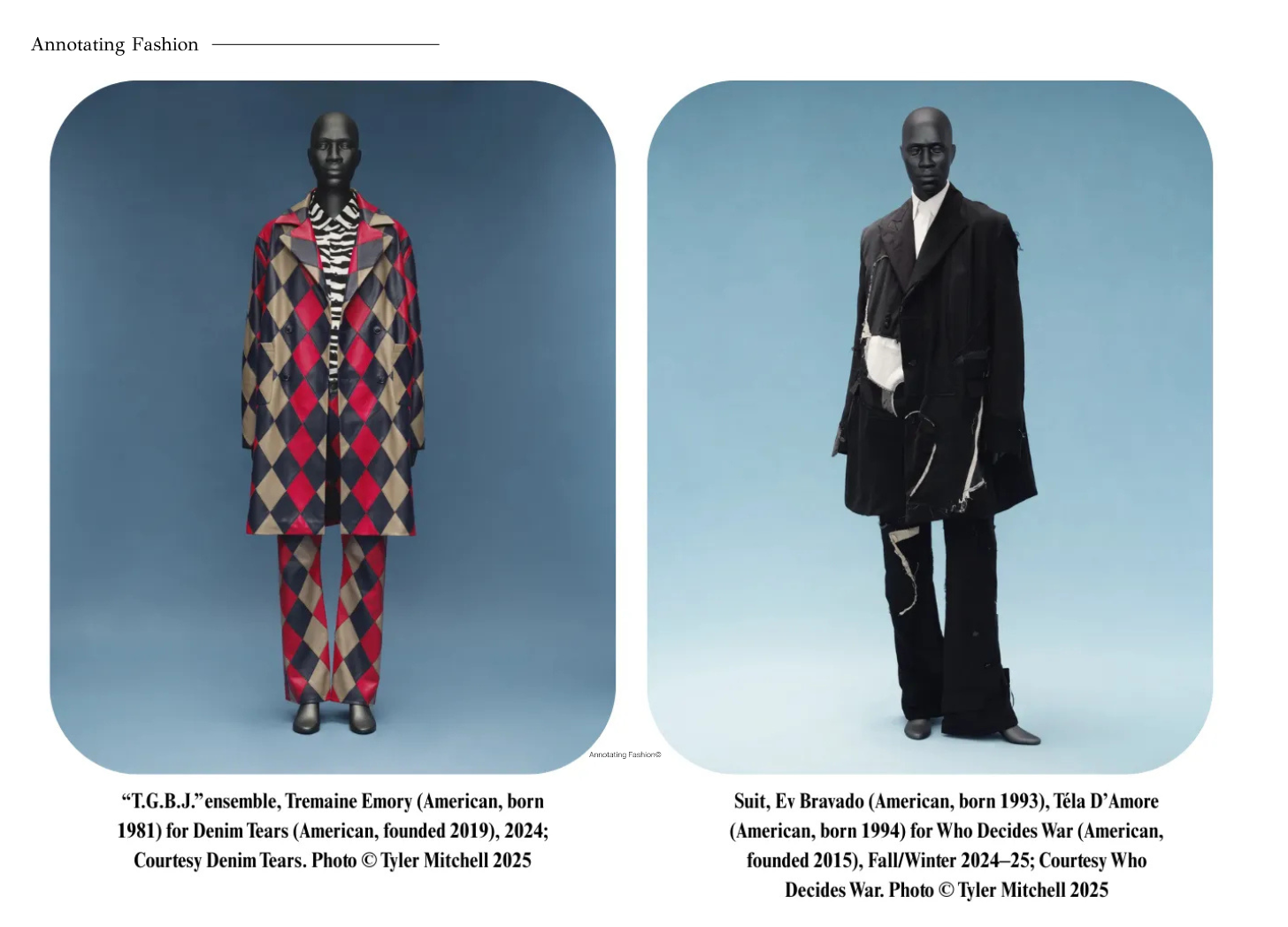
That visibility could be seen as a double- edged sword. For Black creatives, performers, and style icons, being “visible" comes with risk—and possibilities.
Black dandyism can communicate moments of freedom, strength, resolution and identity. But how the Black dandy is viewed depends on who’s looking.
In her book Unmarked: The Politics of Performance, Peggy Phelan warns that being seen isn’t the same as being understood — and sometimes, visibility can actually mean powerlessness.
For marginalised communities, showing up in the spotlight doesn’t guarantee control over how you’re seen or what gets projected onto you.
She compares visibility to translation: when something is translated, it always risks being changed or misinterpreted. But the upside? More people might begin to understand your language.
And for centuries, Black people across the diaspora have used style, especially dandyism, to try and communicate the richness and complexity of their identities. But it’s always come with risks—of being misread, stereotyped, or flattened—alongside the hope that they’ll be truly seen and understood.
Every year, the iconic steps of New York’s Metropolitan Museum of Art (or Met for short) transform into a grand, exclusive, and impossibly styled stage for all the world to see.
And this year, that stage — and its performers — will carry more meaning than ever before.
This year, The Met Gala is set to give Black creatives, artists, and other influential voices a rare platform to communicate identity through the medium of fashion.
Or at least, it should. It’s not lost on me that there’s politics involved when it comes to who gets an invite, and who doesn’t.
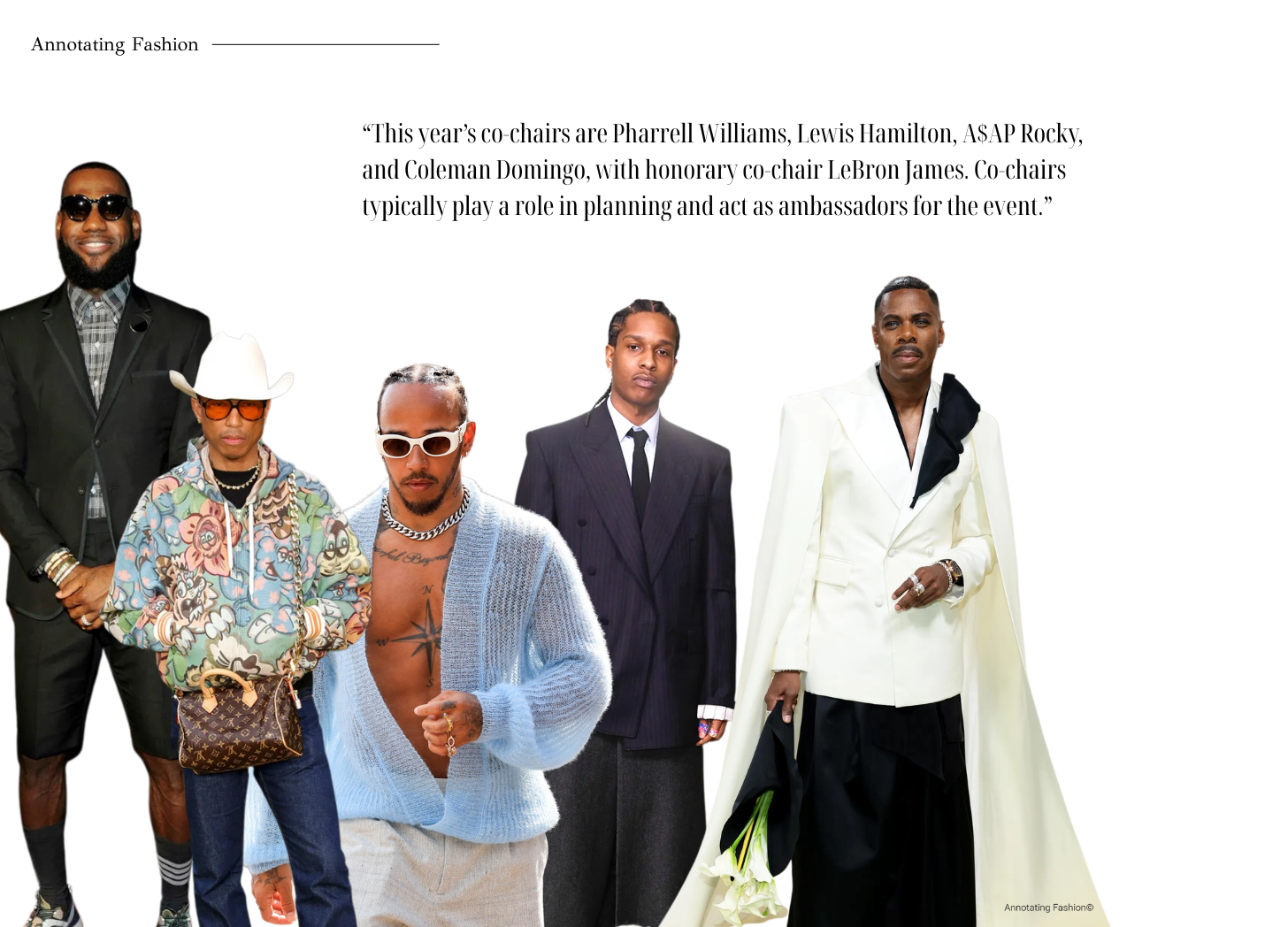
collaged for illustrative/educational purposes
This year’s co-chairs are Pharrell Williams, Lewis Hamilton, A$AP Rocky, and Coleman Domingo, with honorary co-chair LeBron James. Co-chairs typically play a role in planning and act as ambassadors for the event.
This was a point of discussion for the panel in the Complex’s YouTube series PLEASE EXPLAIN, where cultural icon June Ambrose remarked:
“I think it's really nice to have this generation of young men and arbiters of the culture participate. It would be nice if we had some elders alongside them.”
“It'd be interesting to see who gets a seat at the table — because we all can't be co-chairs.”
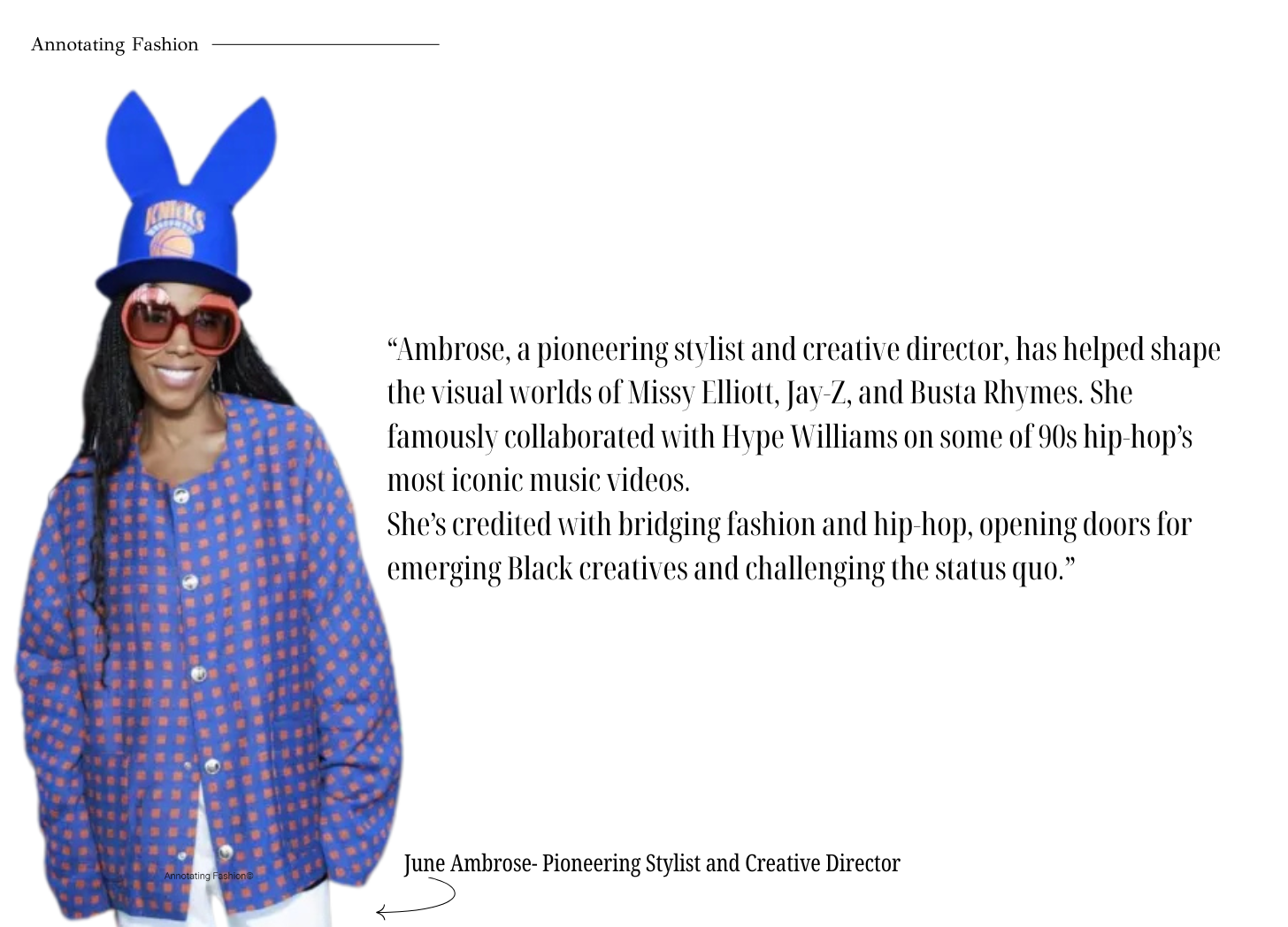
Credit: Photo by Jason Mendez/Getty Images for NYFW via Essence.com
Ambrose, a pioneering stylist and creative director, has helped shape the visual worlds of Missy Elliott, Jay-Z, and Busta Rhymes. She famously collaborated with Hype Williams on some of 90s hip-hop’s most iconic music videos.
She’s credited with bridging fashion and hip-hop, opening doors for emerging Black creatives and challenging the status quo.
Yet despite her decades-long influence, Ambrose has never had a seat at the table.
“I have not had a seat at the table, but that doesn't make me any more or less relevant. I understand my contribution. I have no bitterness in any one of my bones. I'm actually excited — and I feel my contribution has been made. I'm excited to see, alive, how that is interpreted.”
So, we know the Gala is technically a charity fundraiser for the Costume Institute, and serves as the launch of its annual exhibition. But access to that red carpet still hinges on who can afford the ticket — or who gets invited.
A single ticket reportedly costs an eye watering £23,000, while a table can go for upwards of £211,000.
Not everyone buys their way in, though. Usually, a fashion house purchases a table and invites selected guests to attend, in exchange for this invite those guests will wear the designs of that brand.
The politics and barriers are at play long before anyone even steps onto the carpet.
But in 2021, F1 driver Lewis Hamilton — now one of this year’s co-chairs — broke those barriers by buying his own table and using it to host emerging Black designers who might not have otherwise had access.
There’s no denying it — this year’s theme has been a long time coming.
Black identities, culture, and history are, as Rihanna recently put it, “brought to the forefront on a platform where we've been kind of hidden.”
As a Black woman myself, I’m genuinely excited to see it come to life. But I can’t help but wonder: how will our culture and identity be interpreted on that stage — especially when they’re so often stereotyped, misread, or reduced?
Now, over to you. What do you think of this year’s Met Gala theme? How do you view the Met Gala and the politics behind it? And who are you most excited to see on this year’s red carpet?
Image Credit Disclaimer
I do not own the rights to any of the images featured above. I have made every effort to credit photographers and creators as accurately as possible. However, if any credit has been missed or attributed incorrectly, please do let me know so I can amend it promptly.